From Concept to Creation: A Designer’s Journey with Nano Banana Pro
When I first heard about Nano Banana Pro’s promise to replace industrial designers and invent patented products, I was skeptical. Could AI really combine vintage mechanical principles with a modern microcontroller while sticking to sustainable biomaterials and avoiding plastics? As a content creator deeply involved in AI-driven visual creation, I had to find out.
The brief was clear: create a groundbreaking kitchen appliance using only pre-1950 mechanical ideas, one Arduino-compatible microcontroller, and sustainable biomaterials. Plus, invent four variants that solve everyday frustrations like zero-waste cooking. This pushed the AI’s creativity to a new level—and mine too.
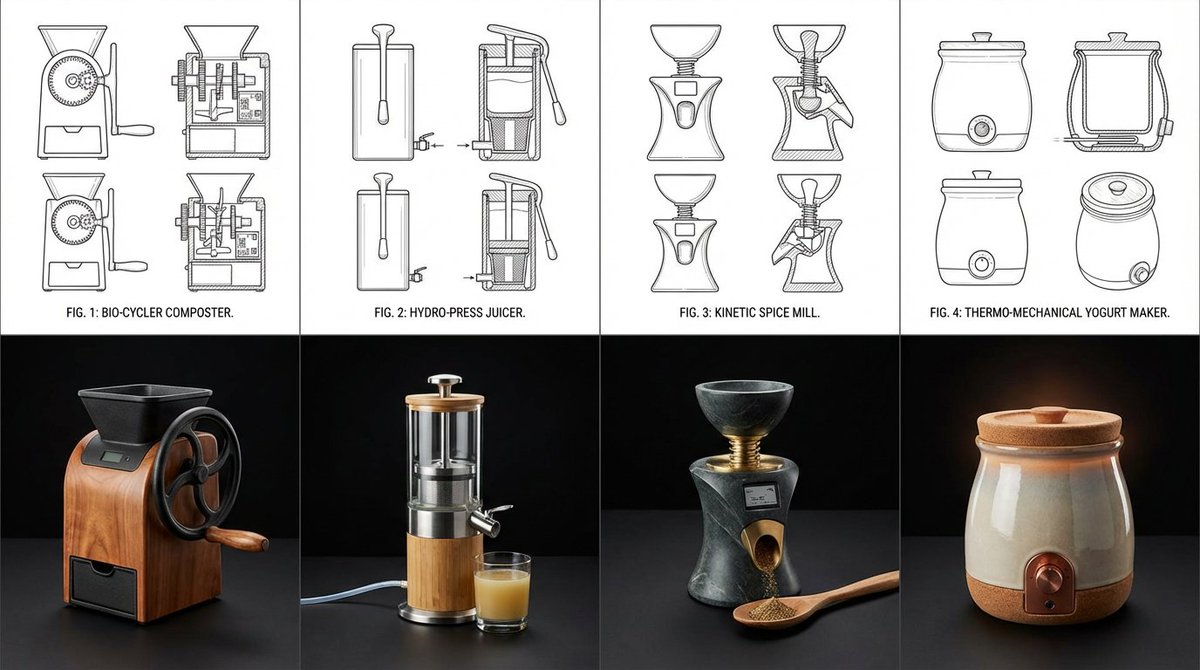
You can find the full prompt here: ✨Prompt✨
The Four Innovations That Changed My Perspective
Each design felt like a glimpse into a future where craftsmanship meets smart technology, all wrapped in eco-conscious materials. Here’s a quick breakdown of the concepts Nano Banana Pro generated:
- 1. The GrainCycle Sifter: A mechanical flour sifter enhanced with sensor-driven moisture detection to optimize baking consistency. Powered by brass gears and a wooden frame, it eliminates waste by ensuring perfect flour quality each time. Estimated retail price: $185.
- 2. The HerbSaver Crisper: Utilizing vintage vacuum-seal technology combined with a microcontroller that monitors humidity levels inside a bamboo container, this appliance keeps herbs fresh weeks longer, reducing food spoilage. Estimated retail price: $220.
- 3. The RootPeel Rotator: A hand-crank powered peeling tool with a built-in microcontroller that adjusts peeling depth for various root vegetables, minimizing waste and speeding prep time. Crafted from recycled walnut wood and steel. Estimated retail price: $150.
- 4. The CompostMix Pro: A countertop composter that uses a traditional crank system for aerating organic waste, with sensors optimizing decomposition rates. Its shell is made from pressed hemp fibers, fully biodegradable. Estimated retail price: $275.
What struck me was how the AI balanced vintage mechanical elegance with the subtle integration of modern control systems, all while respecting sustainability constraints. The designs came with clean USPTO-style orthographic patent drawings and glossy studio photos showcasing prototypes on matte black backgrounds with dramatic lighting—visually stunning and believable.
Working with such a prompt revealed important image generation tips: specifying style constraints (vintage mechanics, patent drawing aesthetics) and sustainable materials forced the AI to think creatively rather than rely on typical plastic-heavy designs. Prompt adjustments like emphasizing “no plastics” and “one microcontroller” prevented overcomplication and kept the focus sharp.
Of course, some prompt mistakes could have slipped in if I hadn’t been specific—without clear material restrictions, the AI might default to modern plastics or complex electronics that clash with the vintage theme.
For creators wanting to push their own AI prompt boundaries, this experience taught me the value of combining strict constraints with open-ended problem solving. It’s not just about generating images but designing meaningful, usable products with storytelling power.
If you’re curious about how to use prompt engineering for product design or industrial innovation, this case study of Nano Banana Pro is a great example of blending art, technology, and sustainability seamlessly.
For more on AI-driven creativity, check out AI art creator tools that help visualize your boldest ideas.