Why I Tried Pixar-Style Character Deconstruction
As a content creator fascinated by AI image generation, I recently dove into crafting a Pixar/Disney-inspired 3D character deconstruction art poster. The prompt called for a stylized realism approach, reminiscent of iconic movies like "Coco" and "Turning Red," aiming for that high-end cinematic poster quality. I wanted to see how the intricate layering of realistic textures and lighting could elevate character visuals beyond typical illustrations.
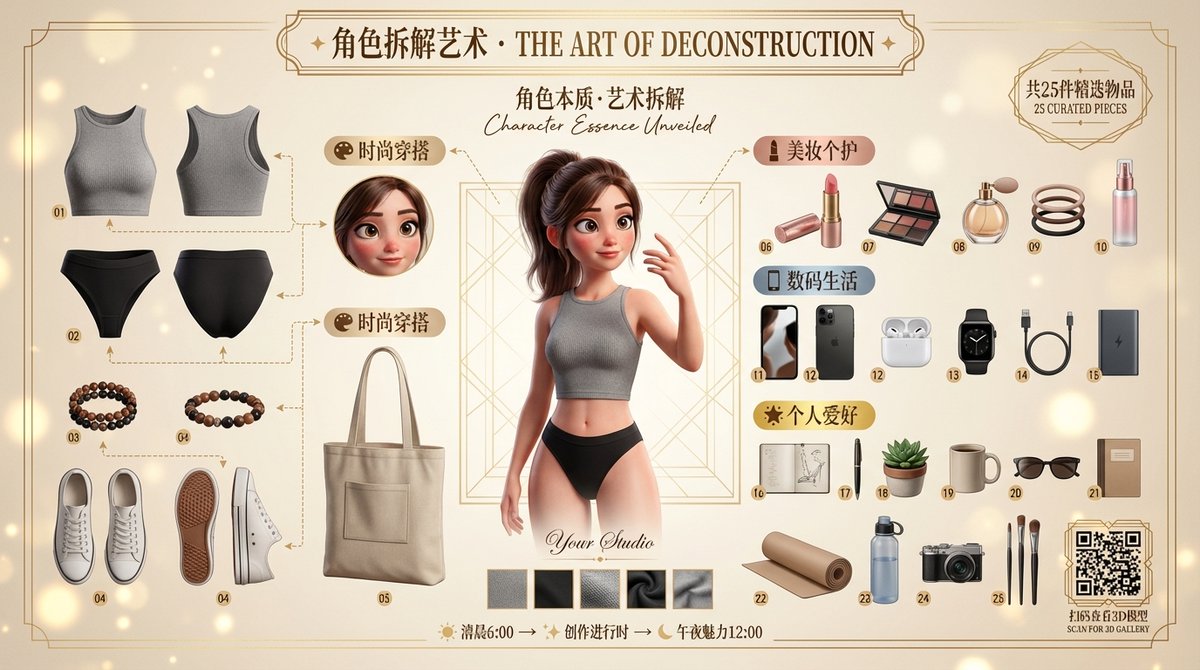
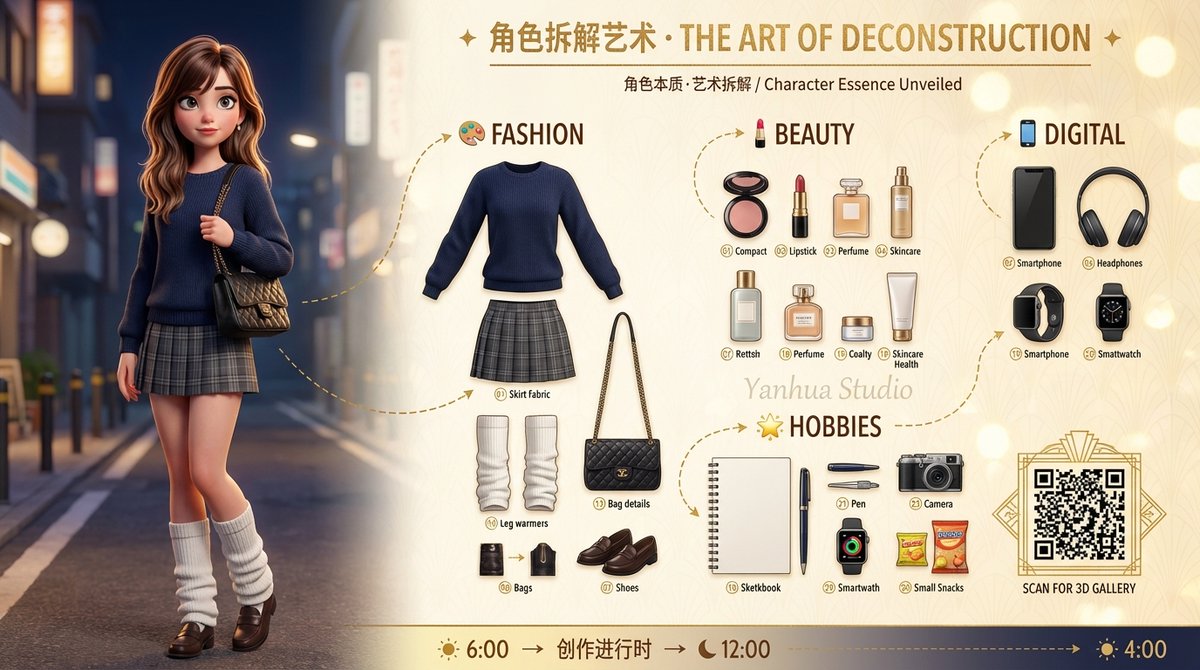
This project pushed me to focus on fine details — from the character's expressive Pixar-style big eyes with multiple highlights and carefully modeled irises, to the skin's triple subsurface scattering layers that revealed natural pores and subtle blush. The hair shader used anisotropic effects with over 100,000 strands to achieve natural highlights and color gradients. Clothing textures featured microscopic fabric weaves and physically simulated folds, mimicking real-world materials through PBR techniques.
Visual Complexity & Item Layout
The exploded view concept was pure magic. Thirty to thirty-six individual items were arranged in neat knolling layouts either radiating or at right angles, each rendered with the same 3D quality as the main character. Categories like fashion, beauty, digital gadgets, and hobbies were color-coded with elegant icons — champagne gold for fashion, rose gold for beauty, steel blue for tech, and 24K gold for personal interests.
- Fashion pieces included detailed sleeve and collar deconstructions, shoe parts, and accessories.
- Beauty items ranged from lipsticks to skincare devices, all with subtle reflections and textures.
- Digital gadgets featured accurate roughness and reflectivity, like phones and watches.
- Hobby items showcased brushes, books, and jewelry with realistic metallic and fabric finishes.
Connecting lines and decorative arrows elegantly linked floating parts with labels and annotations, including fabric swatches and measurement rulers, all wrapped in a soft gradient background with a tasteful Art Deco pattern overlay.
Challenges & Insights
One of the biggest challenges was balancing the ultra-high detail with an overall harmonious composition. Ensuring each element had crisp edges, natural shadows, and consistent lighting required careful tweaking of 4K resolution renders with 16x MSAA antialiasing. The cinematic three-point lighting combined with HDRI environment maps created that warm, inviting atmosphere enhanced further by film grain and bloom effects in post-processing.
Typography also played a key role. The main title used a gold foil effect with elegant fonts, while subtitles and category headers employed handwritten and sans-serif styles for readability. The watermark and QR code branding elements were subtle but added a professional touch.
From a practical standpoint, I learned how essential prompt adjustments are when working with complex AI image generation tasks. Missing or vague instructions on material properties or lighting could easily lead to flat or unrealistic results. Precision in describing skin subsurface scattering, hair shaders, and fabric textures made all the difference.
Final Thoughts on Using This Prompt
This Pixar-style character deconstruction poster prompt is a fantastic tool for anyone wanting to create visually rich, story-driven character art with AI. It’s perfect for fashion lookbooks, luxury product catalogs, or personal portfolios aiming for that premium cinematic feel.
If you’re experimenting with AI image generators, be sure to focus on detailed material descriptions and lighting setups. Also, consider how item layout and typography contribute to the narrative — they’re just as important as the character model itself.
You can find the full prompt here: ✨Prompt✨
For more inspiration, check out text to image and AI art creator resources to enhance your image generation skills.