Immersed in the Future of Music and Street Life
Last night, I found myself wandering through a lively Indian street market, but this wasn’t just any stroll. Inspired by a vivid AI prompt, I imagined the scene through the lens of augmented reality — where music and reality collide. Picture this: a man casually standing amidst green and yellow auto-rickshaws, neon shop signs in Hindi glowing warmly, all under the immersive glow of floating music player cards orbiting him in 3D space.
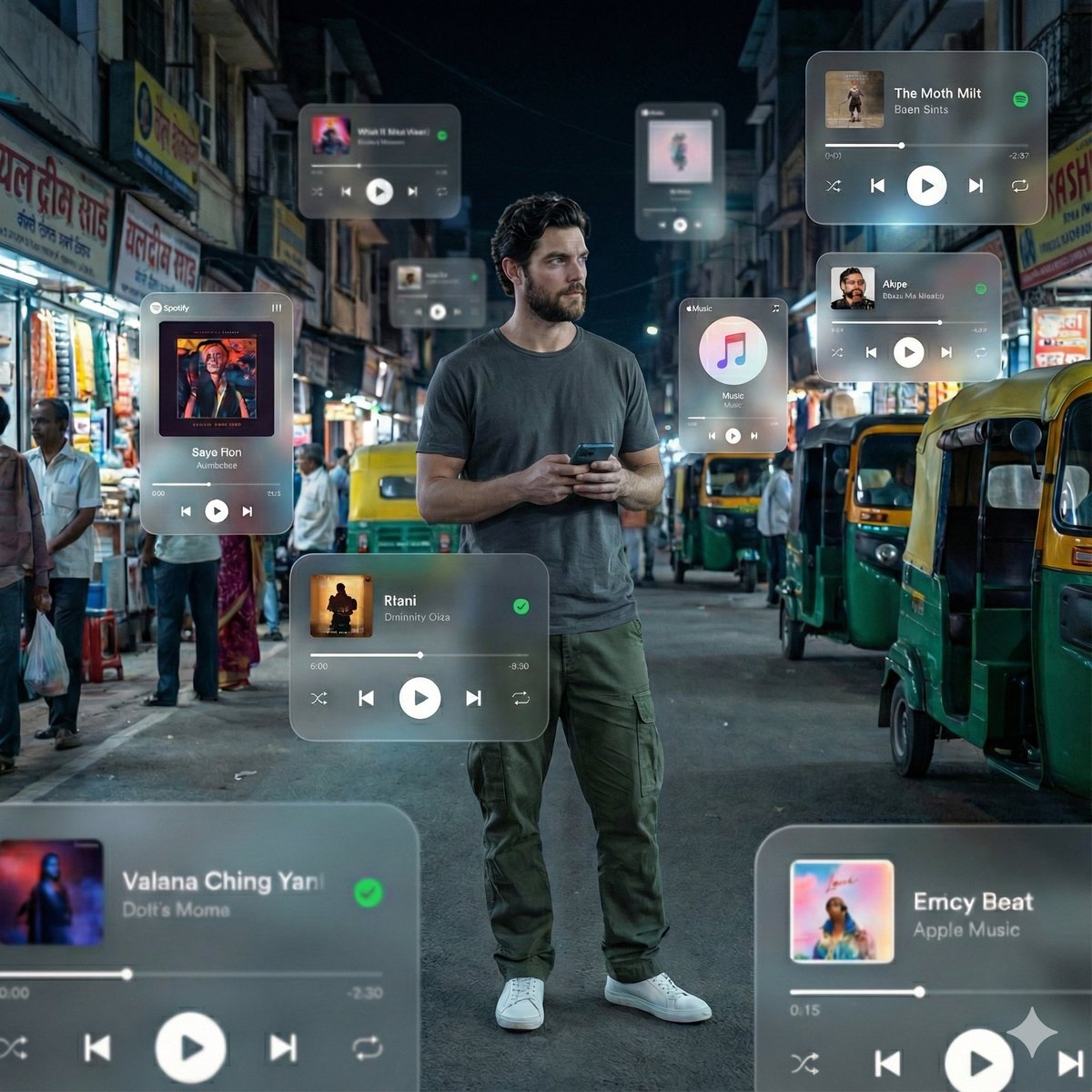
The hyper-realistic, cinematic 8k image created with Gemini Nano Banana Pro perfectly captures this blend of tradition and tech. The subject’s simple grey t-shirt, green cargo pants, and white sneakers ground him in authenticity, while the translucent frosted-glass AR cards, featuring colorful album art and glowing playback controls, hover around him like a personal concert. The depth of field technique adds to the magic — some interface cards blur softly in the foreground while others remain razor-sharp near the subject.
What struck me most was how this fusion of augmented reality and street culture changes the way we experience space and sound. The warm ambient street lighting contrasts beautifully with the cool, blue-white luminescence of the AR elements, creating a cyberpunk vibe without losing the market’s authentic hustle and bustle. It’s a reminder that music isn’t just background noise—it can transform an environment.
Insights on Using AI Prompts for Visual Storytelling
Working with this prompt taught me some valuable image generation tips. For instance, specifying detailed environmental elements like "auto-rickshaws" and "Hindi shop signs" ensured the scene felt genuine and immersive. The negative prompt helped avoid unwanted formal wear or cartoonish details, keeping the image photorealistic and cinematic.
One mistake I often see in similar prompts is overloading the scene with too many AR elements, which can clutter the composition. Here, the careful balance of blurred and sharp interface cards creates focus and depth, guiding your eyes naturally.
For creators curious about how to use prompts like these, start by imagining the emotional vibe you want—the fusion of old and new, or calm and chaos—and then layer in specific visual details and lighting moods to bring it alive. This approach makes the AI output feel less like a random image and more like a vivid story.
You can find the full prompt here: ✨Prompt✨
For those looking to explore further, I highly recommend checking out advanced AI image generator tools that excel at blending photorealism with creative styles. Whether you want to experiment with text to image conversion or dive into cyberpunk aesthetics, the possibilities are endless with the right prompt.
Discover more about how an AI art creator can help you craft visually stunning narratives that capture moments both real and imagined.