Recently, I tried using Google Gemini Nano Banana pro to bring a minimalist cinematic portrait idea to life. The concept was simple but layered: a young woman seated on a wooden stool, dressed in neutral tones, with a calm, confident gaze. What really caught my eye was the background — a large paper-cut style illustration of the woman’s profile, adding a conceptual dual-identity vibe that felt both modern and deeply personal.
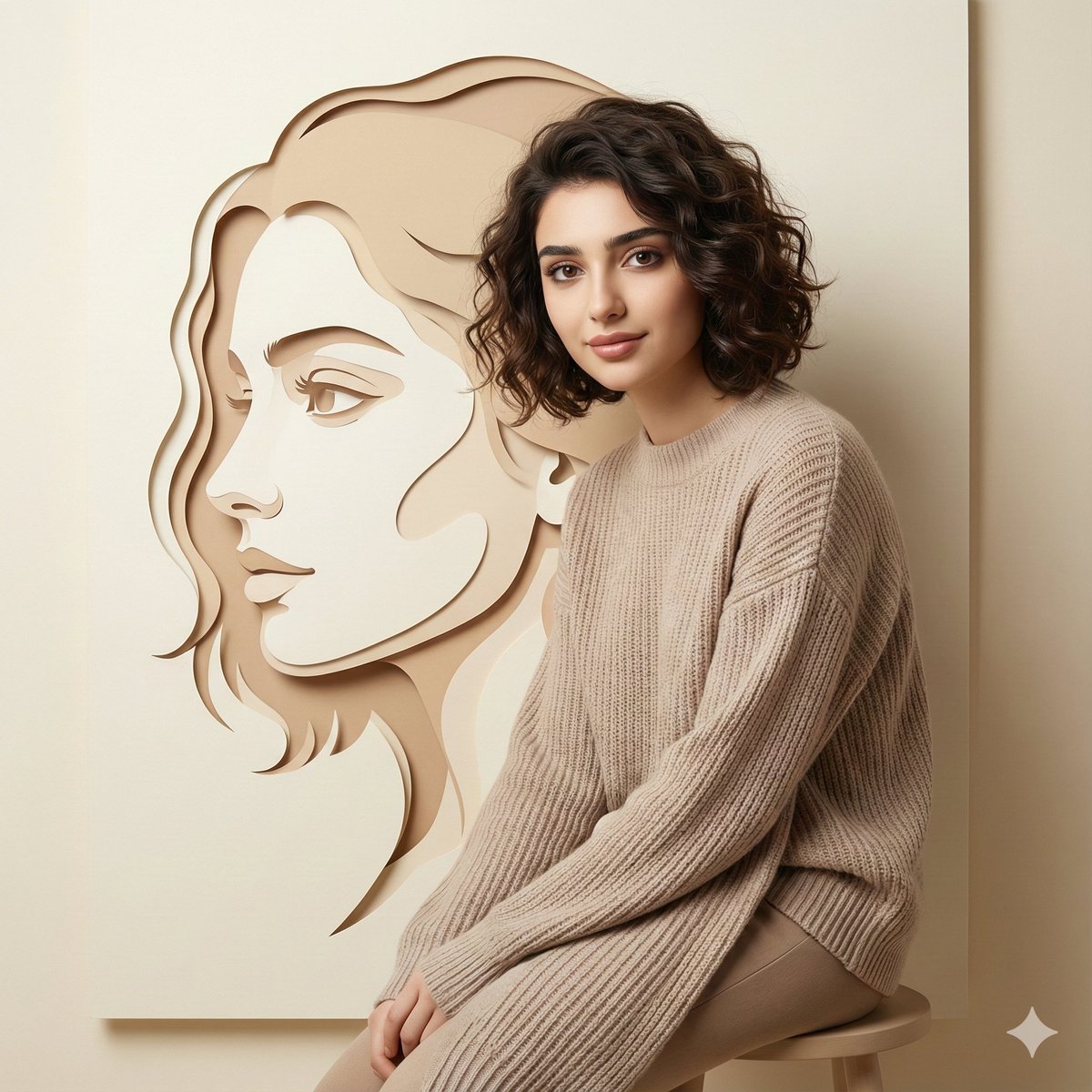
The lighting setup was key here. The soft, diffused studio lighting created gentle shadows that enhanced the subtle textures of the beige knit sweater and neutral pants, while maintaining a muted monochrome palette that reinforced the editorial mood. The shallow depth of field helped isolate the subject, making the ultra-clean composition feel intentional and polished.
Working with this AI prompt was a fascinating experience. It pushed me to think about how text to image tools interpret nuanced visual storytelling — merging fashion, modern art, and portraiture into a single frame. The high realism and 4K detail made the final image feel like a professional studio shot, perfect for editorial use or a personal art project.
One practical insight: when crafting prompts for image generation, specificity about lighting, mood, and composition really helps avoid common mistakes like harsh shadows or overly busy backgrounds. This prompt’s focus on a soft, warm cream wall and layered paper-cut illustration created a calm yet engaging backdrop without distracting from the subject.
If you’re exploring AI art creators, this kind of prompt is a great example of how to blend style and use case for compelling results. For more tips on how to use prompt adjustments effectively, I recommend experimenting with lighting descriptors and color palettes to find your own unique aesthetic.
You can find the full prompt here: ✨Prompt✨
For anyone curious about AI image generation, tools like AI image generator and text to image platforms are amazing for turning detailed ideas into visual reality. They’re perfect for creators wanting to explore new visual moods or industries.