Walking through a busy city intersection usually means dodging crowds and rushing past towering billboards. But recently, my usual route was interrupted by something truly extraordinary: an enormous L-shaped glasses-free 3D LED screen that completely redefined public digital art.
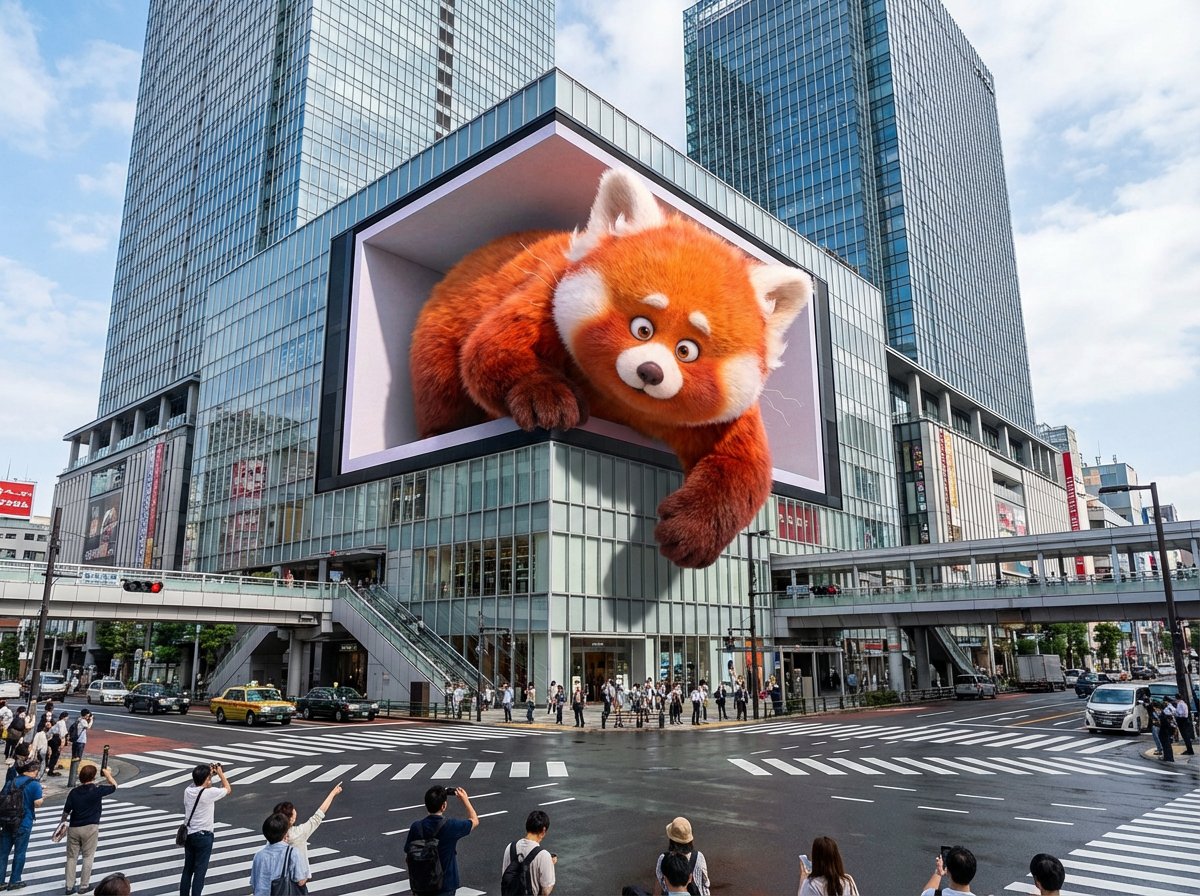

The screen itself was architectural marvel, echoing the iconic design vibes of places like Shinjuku in Tokyo or Taikoo Li in Chengdu. What really caught my eye was the animation—a giant, adorable red panda pawing playfully at passersby. The level of depth was stunning; this wasn’t your typical flat billboard. The panda’s fluffy paws seemed to reach right out into the street, while its curious face extended beyond the screen’s edges, making it feel like the creature was truly part of the urban scene.
Under the bright daylight, the 3D effect became even more convincing. The shadows cast by the panda’s paws and body shifted naturally on the screen and even onto nearby buildings, blending digital imagery with real-world surroundings. The vibrant colors and intricate details made the animation feel alive, inviting pedestrians to pause and engage with the display rather than just rush by.
As a creator who often experiments with AI image generation, seeing such a seamless integration of technology, art, and environment was inspiring. It highlighted how thoughtful prompt crafting—like the one from @dotey that powered this piece—can lead to visuals that transcend traditional screens. This glasses-free 3D approach avoids the hassle of special glasses but still delivers a deeply immersive experience.
For anyone interested in text to image technologies, this installation is a masterclass in balancing depth, lighting, and spatial awareness. The key was how the prompt demanded realistic shadows and interaction with daylight, which many AI prompts miss, resulting in flat or unnatural visuals. Adjusting prompts to include environmental context can elevate your AI creations tremendously.
Ultimately, this experience changed how I think about urban digital art and the potential of AI-driven image generation. It’s not just about flashy visuals but about creating moments where technology and city life collide in playful, unexpected ways.
You can find the full prompt here: ✨Prompt✨