Discovering the Magic Behind a Hyper-Realistic Vintage Grid
As a content creator who loves blending AI with visual storytelling, I recently experimented with a hyper-realistic vintage film portrait grid that truly amazed me. The project was inspired by the idea "Born to be framed, not explained." Using a 2x2 grid layout, the AI rendered an ultra-high-resolution image capturing every delicate detail of a female subject in her late 20s.
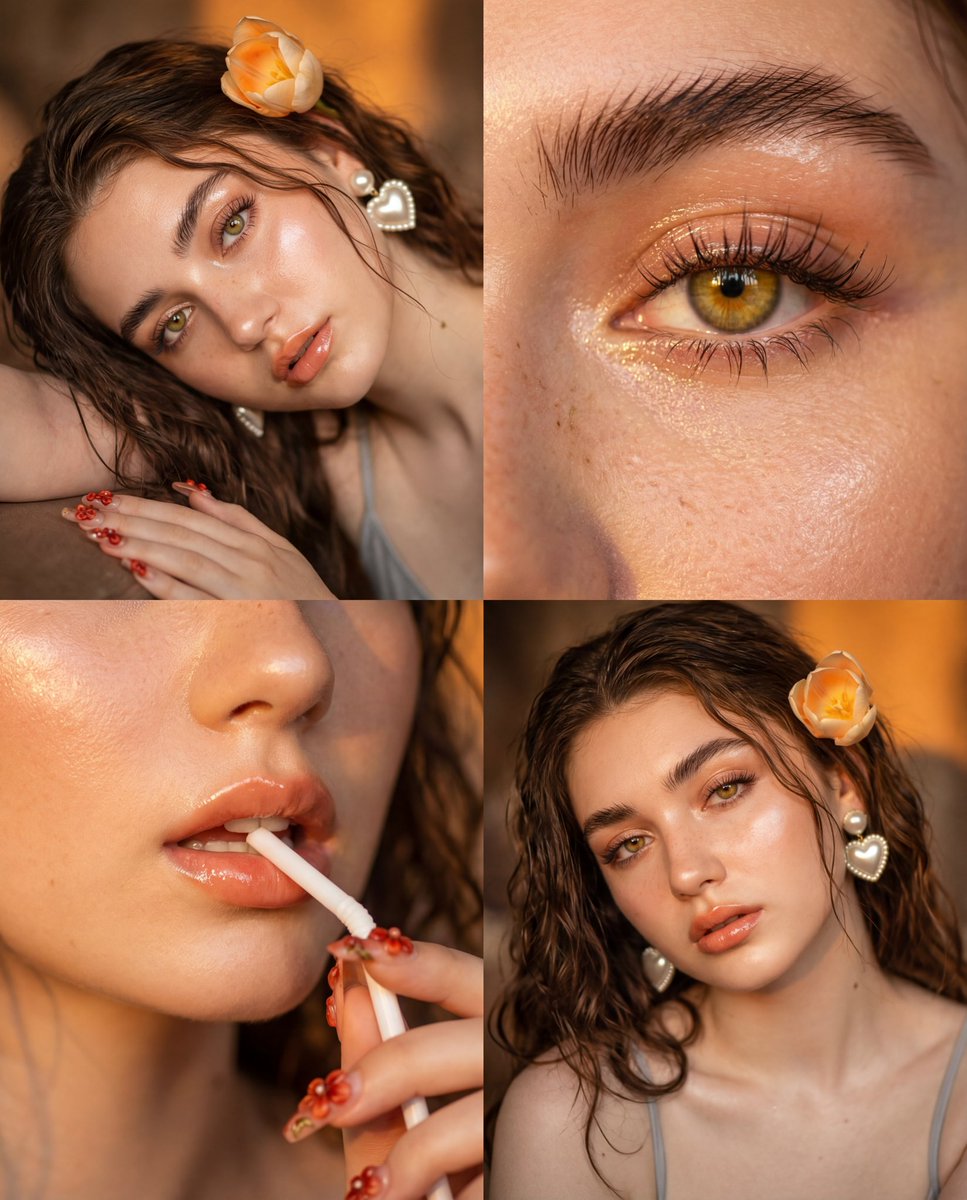
The lighting was warm and golden, reminiscent of the golden hour or cozy indoor settings, which added an intimate and sensual atmosphere. The subject’s very pale, dewy glass skin glowed with natural freckles and intense highlighter on the cheekbones and nose bridge. What struck me most was how the AI preserved the skin’s natural texture perfectly, maintaining authenticity rather than over-smoothing.
The eyes, a mesmerizing yellowish-green, were framed by long, curled, doll-like lashes that looked so layered and real it felt like they could flutter. I appreciated the soft shimmer eyeshadow paired with thick, gel-brushed brows, reinforcing the dreamy sultry expression visible throughout the grid.
Why the 4-Grid Layout Deepened the Story
The top-left and bottom-right shots mirrored each other with full-face high-angle poses where the subject rested her head on a surface, mouth slightly open, evoking a contemplative mood. The top-right close-up focused on the right eye, highlighting iris colors and lash definition with a cinematic glow and subtle film grain that enhanced the vintage vibe.
My favorite was the bottom-left close-up of lips and fingers gently biting a white straw. The wet, glossy lips paired with intricate 3D reddish-orange floral nail art created a tactile richness that felt both fresh and nostalgic.
Visual Mood and Practical AI Image Tips
The background was a carefully crafted soft film bokeh with warm orange, golden yellow, and brown tones, heavily blurred to avoid distractions and keep the focus on the subject. The overall post-processing mimicked vintage film with a soft focus and subtle grain, adding cinematic warmth and glow.
For anyone looking to recreate or adjust this kind of prompt, I’d recommend paying close attention to constraints like no face shape or feature changes to keep identity intact. Using ultra-high resolution and emphasizing skin detail helps maintain realism. Also, balancing warm dramatic lighting with soft film textures adds emotional depth.
This experience taught me how powerful Text to Image AI can be when you combine precise prompt details with creative vision. The result felt less like AI art and more like a vintage photograph with a story to tell.
You can find the full prompt here: ✨Prompt✨
Explore more about AI art creator tools and image generation tips for your next project.