Discovering Drama in Minimalism
Recently, I challenged myself to create a black-and-white portrait that channels the cinematic noir vibe of iconic photographers like Helmut Newton and Peter Coulson. The prompt called for a woman standing confidently in a minimalist studio, shot from a slightly low angle, capturing a half-body portrait with a calm yet enigmatic expression. The styling was specific—middle-parted braided pigtails with subtle wet hair texture, a tight black sleeveless dress, black leather gloves, and a loosely held leather belt.
The lighting was crucial here: a dramatic single key light from the upper right created high contrast with strong rim light accentuating curves. The plain textured wall background and shallow depth of field added to the fine art fashion photography feel. This setup forced me to focus on how light sculpts the subject’s form and mood.
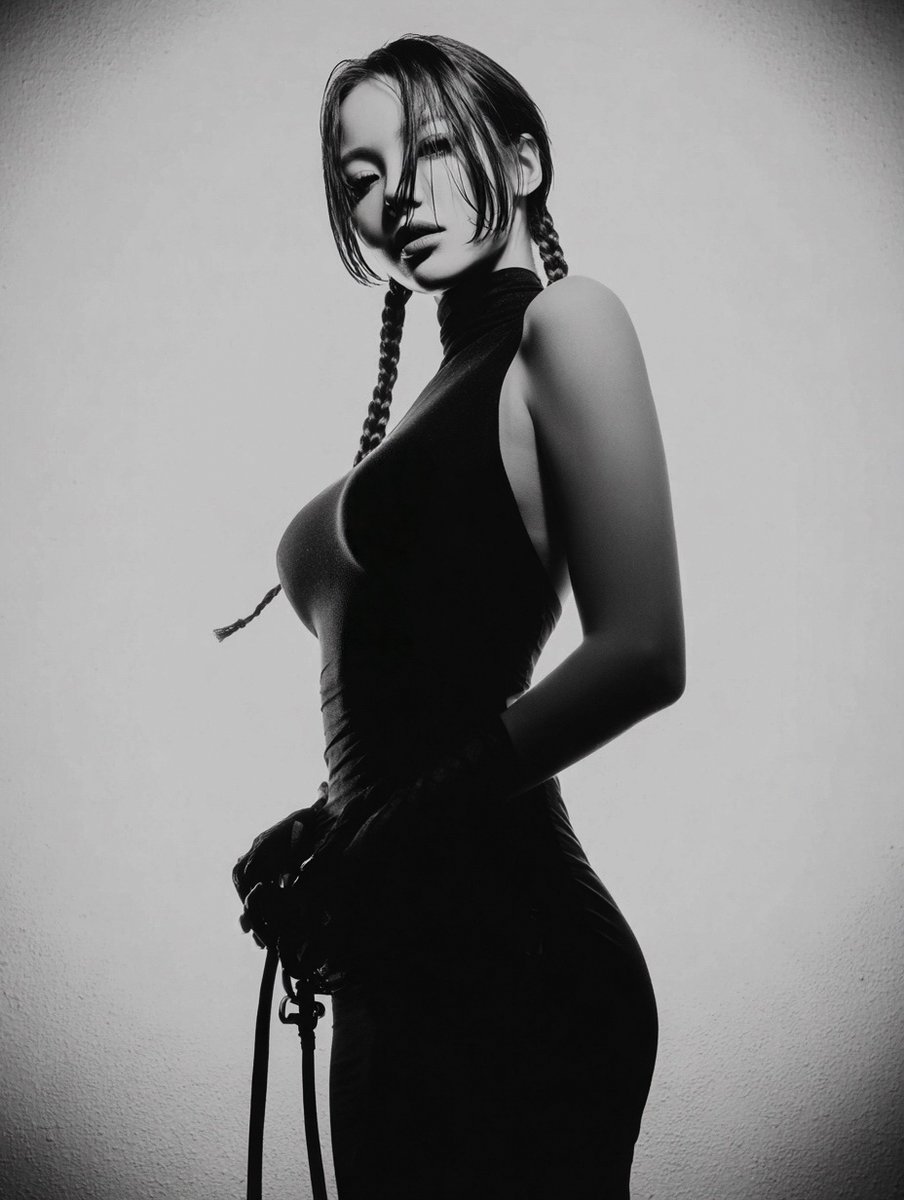
You can find the full prompt here: ✨Prompt✨
What Changed in My Approach
Before this, my portraits often leaned toward colorful and busy compositions. This black-and-white approach taught me how to use contrast and texture to convey emotion and power without distraction. The wet hair strands falling over the face added a subtle narrative element—an imperfect yet elegant touch that humanizes the image.
Also, shooting from a slightly low angle gave the subject an undeniable presence, making her look poised and commanding. The leather belt, loosely held, introduced a prop that wasn’t overpowering but added to the story.
Practical Insights for Your Next AI Image
- Leverage dramatic lighting to add depth in black-and-white images.
- Consider subtle textures like wet hair or fabric details to break monotony.
- Use props sparingly to enhance storytelling without clutter.
- Experiment with angles—slightly low angles can empower your subject.
- Keep backgrounds simple to focus attention on your subject’s expression and form.
This prompt is a great example of how text to image AI tools can push creative boundaries by combining mood, fashion, and fine art photography principles.
Common Prompt Mistakes to Avoid
One easy pitfall is overloading the prompt with too many conflicting details, which can confuse the AI and dilute the mood. Here, focusing on a clear cinematic noir atmosphere with specific lighting and styling made all the difference. Another is ignoring lighting direction—since light sculpts and defines black-and-white images, its placement is critical.
If you want to explore more about AI art creator techniques or image generation tips, this prompt is a solid starting point for refining your visual storytelling.