This holiday season, I decided to try something whimsically creative: turning my portrait into a tiny Christmas nutcracker doll. The idea felt playful yet challenging because the goal was to keep the classic festive feel while transforming my face into a painted wooden toy head—no realistic skin or human details allowed.
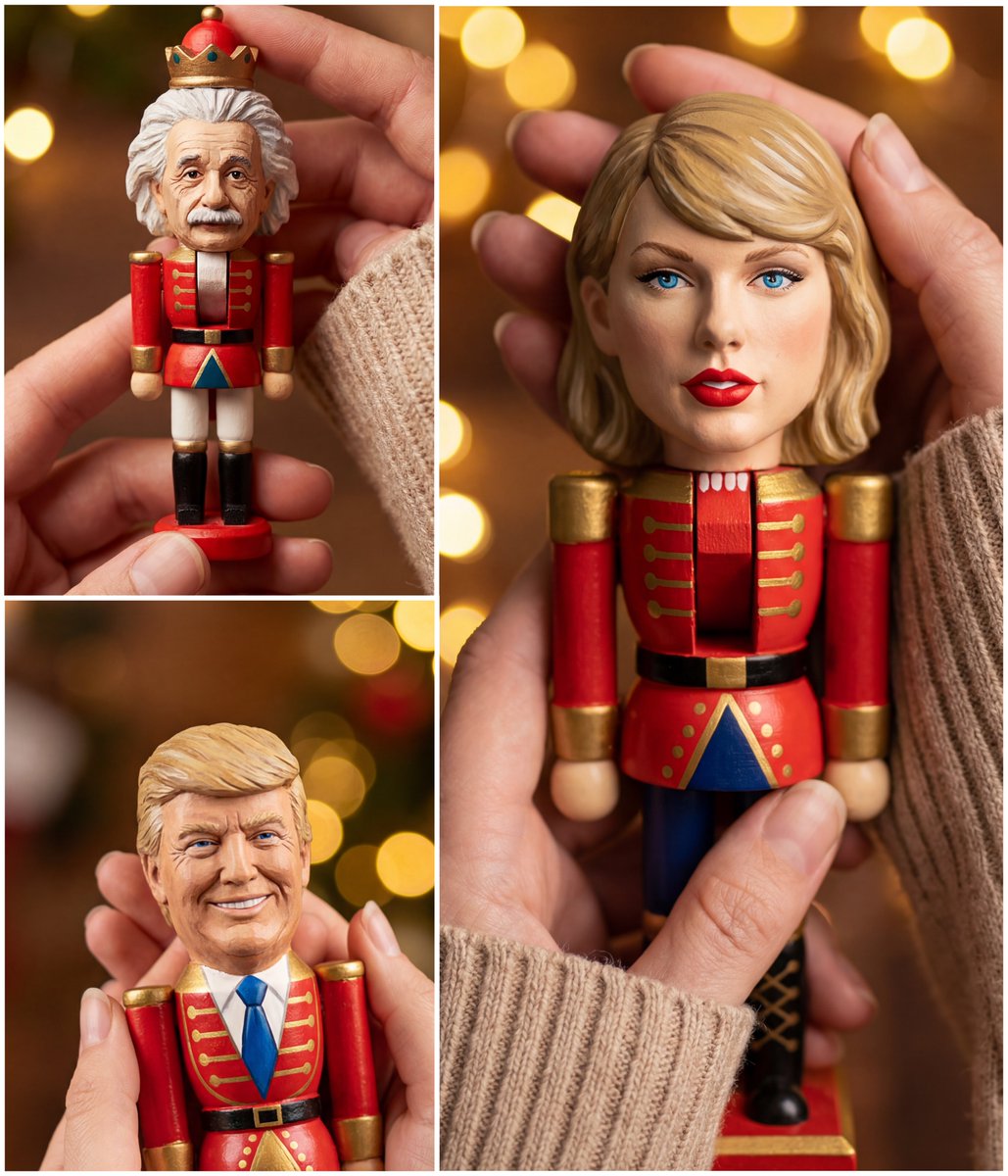
The final image perfectly captured a pair of gentle hands in knitted beige sleeves holding the miniature nutcracker, bathed in warm, golden bokeh fairy lights. The shallow depth of field and creamy background blur gave it a cinematic holiday warmth that felt incredibly inviting.
What fascinated me most was how the doll's face was crafted—not a human face pasted on, but a carefully stylized, carved wooden head with matte varnished paint and subtle brush strokes. The tiny sculpted nose and lips, along with the classic nutcracker moustache and crown-like hat, made the miniature figure look authentic yet uniquely mine.
Maintaining the original composition and lighting while only changing the doll's head identity required precise prompt adjustments. I learned that specifying constraints like "do not change hands, sleeves, or background" was crucial to preserving the scene’s cozy atmosphere. Avoiding common prompt mistakes—such as introducing realistic skin textures or human proportions—helped keep the doll toy-like and hyper-realistic at the same time.
This experience taught me how powerful and nuanced text to image prompts can be when carefully crafted. For creators interested in similar projects, I'd recommend focusing on clear style references and detailed negative prompts to prevent unwanted realism or distortions.
You can find the full prompt here: ✨Prompt✨
If you're curious about how to use prompt techniques like these, exploring AI art creator tools and image generation platforms can open up endless creative possibilities. Check out AI image generator and image generation to start experimenting with your own unique visual stories.