Discovering Architecture in Everyday Objects
Recently, I dove into a fascinating AI prompt that reimagines household objects as miniature architectural structures. The idea was to take something familiar—a banana, a toaster, or even a lamp—and reinterpret it as a clean, minimal 3D isometric diorama. This approach abstracts functional elements of the object into architectural features like doors, windows, and volumes, all while maintaining realistic materials and a soft studio lighting effect.
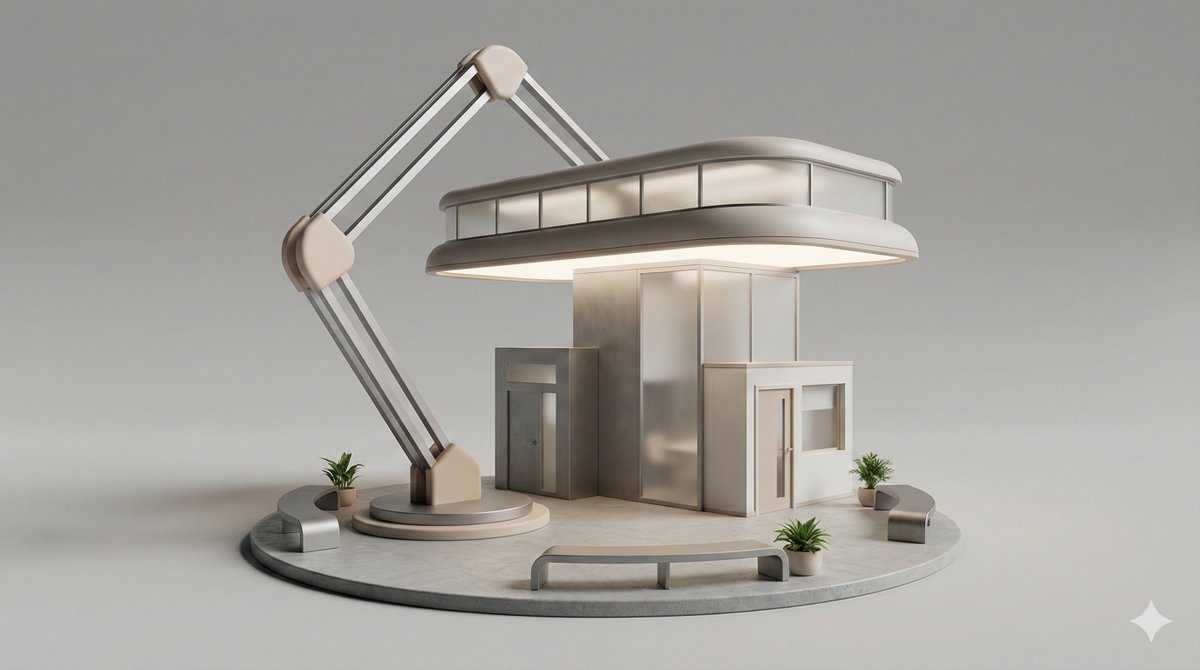


The magic lies in how the AI handles the transformation: rounded edges soften the shapes, making them feel like handcrafted architectural models. The neutral background emphasizes the object-turned-building, making it feel like a tiny world unto itself. The subtle studio lighting adds depth and warmth, highlighting textures and contours that might otherwise go unnoticed.
My Experience with the Prompt
Trying this prompt was a game-changer. I initially chose a simple household object—a banana—to see how the AI would abstract its curves into architectural volumes. Instead of just rendering a literal banana, the AI converted its shape into a sleek, futuristic building with windows where the banana’s ridges would be, and a tiny door at its base. The result felt like a miniature diorama I could hold in my hand.
Playing with different objects, I noticed how the prompt’s emphasis on minimalism and realism helped me appreciate everyday items from a fresh perspective. It pushed me to think in terms of volumes and function rather than just surface appearance. The soft lighting was a beautiful touch, making the models feel tangible and warm.
Tips for Using This AI Prompt
- Choose objects with interesting shapes that can be abstracted into architectural features.
- Focus on the balance between realism and minimalism—too much detail can clutter the model.
- Pay attention to lighting settings to maintain soft shadows and highlights that enhance depth.
- Use rounded edges to give models a polished, handcrafted feel.
One common mistake is to expect the AI to create exact replicas rather than conceptual transformations. Embracing abstraction leads to more visually compelling results.
Why This Matters
This prompt is a brilliant example of how AI can inspire creativity by blending disciplines—in this case, everyday design with architectural visualization. For creators looking to explore new artistic avenues or generate unique content, this approach offers a fresh playground. It’s not just about image generation; it’s about seeing the world differently.
You can find the full prompt here: ✨Prompt✨
Explore more about AI image generator tools and how to optimize your text to image prompts for stunning results. For fellow creators, mastering these prompt adjustments can unlock new visual moods and styles with your AI art creator workflows.