Recently, I experimented with a fascinating AI image prompt that captures a woman’s face fragmented through shards of glass, creating a surreal, kaleidoscopic effect. The style mimics a cinematic close-up shot taken with a 50mm f/1.4 lens, where only one eye remains sharply focused amidst the distorted reflections. Neon pink and teal highlights bounce off the broken glass, adding a modern, futuristic glow to the moody composition.

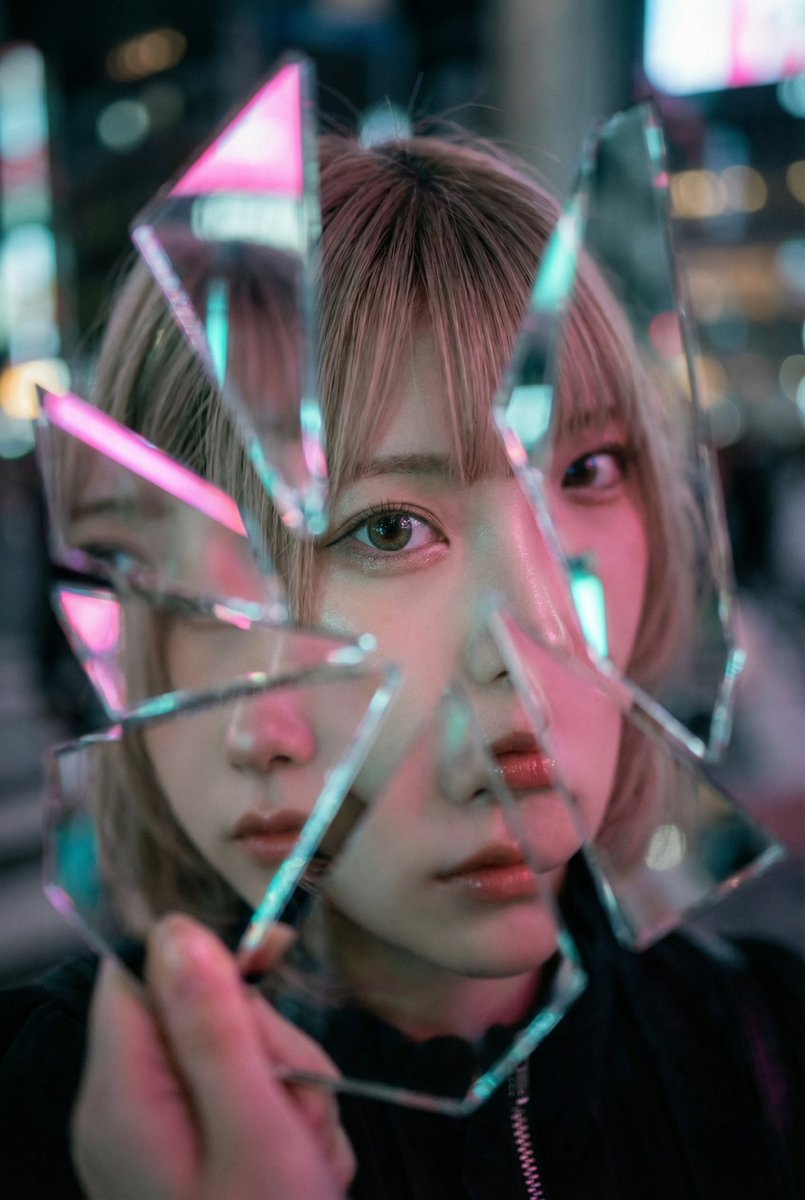
You can find the full prompt here: ✨Prompt✨
What made this experiment stand out was comparing two AI models: Seedream 4.5 and Nano Banana Pro. Both generated stunning shattered glass portraits, but their results felt quite different in character.
Seedream 4.5: Model-Driven Intensity
Seedream 4.5 strongly emphasized the model’s natural features, making her presence dominant despite the fractured mirror effect. The sharpness of the single focused eye was arresting, and the neon reflections felt vibrant and clear. The image leaned into a more hyperreal, almost photographic quality, as if you were peering through an actual broken lens capturing a fleeting moment.
Nano Banana Pro: Prompt-Prioritized Surrealism
On the other hand, Nano Banana Pro seemed to lean more heavily into the prompt’s detailed description, prioritizing the shattered glass kaleidoscope effect and the dreamlike atmosphere. The model’s features appeared more abstracted and blended with the fragmented reflections, enhancing the surreal, almost painterly quality. The subtle digital grain and color grading contributed to a fashion-forward, editorial mood that feels like it belongs in a cutting-edge campaign.
For creators aiming to use text to image AI for portraits with complex visual moods, this comparison is insightful. Seedream 4.5 is great when you want the model’s identity to shine through clearly, while Nano Banana Pro excels if you prefer to emphasize artistic distortion and mood. Both approaches have their charm depending on the story you want your visuals to tell.
If you’re curious about mastering prompt adjustments for effects like extreme bokeh, kaleidoscopic reflections, or neon lighting, it’s crucial to test how different AI art creators interpret your prompts. Minor tweaks can shift the focus between model clarity and artistic abstraction.
For more creative inspiration and practical tips on AI image generation, check out AI image generator tools and explore how prompt by style or prompt by visual mood can elevate your work.
Experimenting with these models taught me the value of knowing your tool’s strengths and how to harness prompt nuances to get the exact cinematic vibe you want. The shattered glass style is a striking way to push visual storytelling with AI, offering endless possibilities for edgy, futuristic portraits.
Happy creating!