Revisiting Resident Evil's Evolution Through AI-Generated Art
As a longtime gaming fan and content creator, I recently experimented with a fascinating AI prompt that captures the evolution of Resident Evil across four iconic console eras. Inspired by a timeline concept, it transforms the classic physical consoles into immersive, glitching worlds that visually narrate the franchise’s growth from 8-bit blocks to photorealistic resin landscapes.
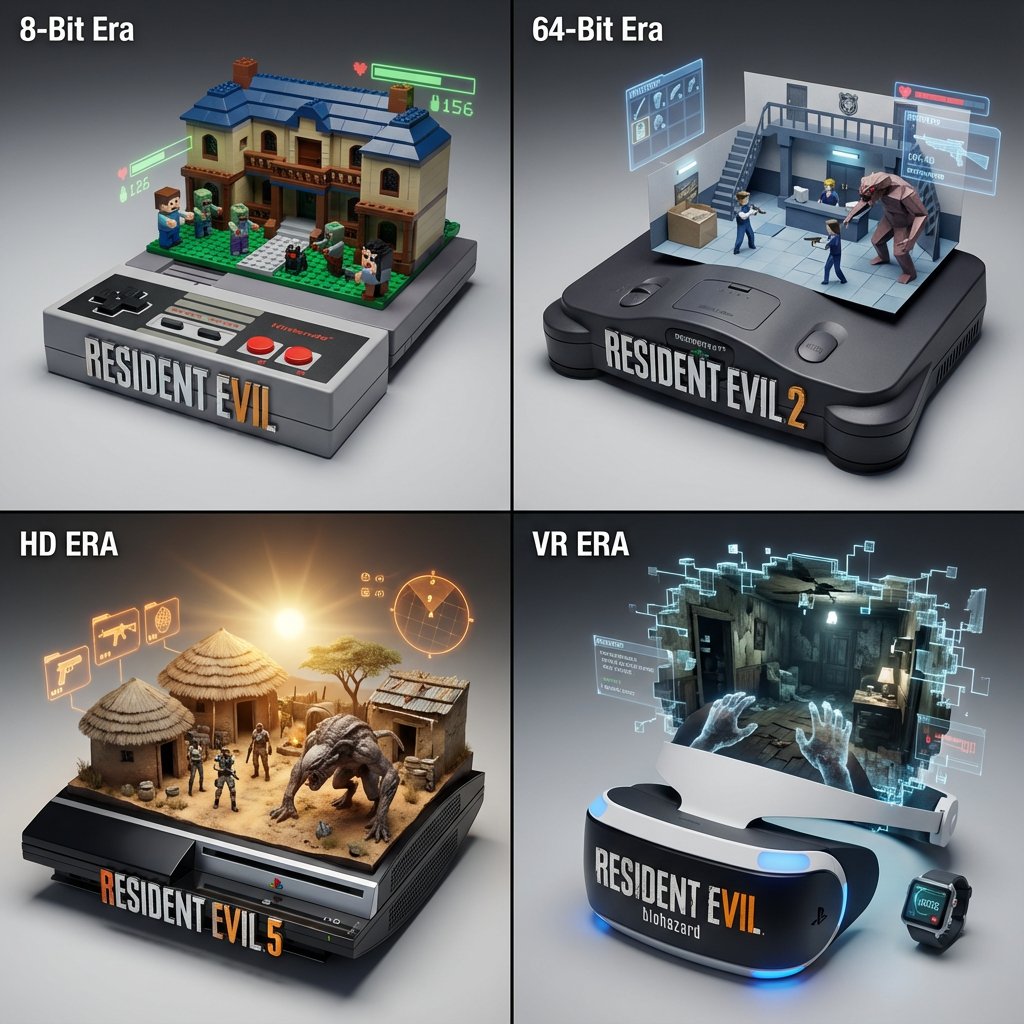
At the heart of this prompt is the idea of a 2x2 grid of console architecture, where each panel represents a pivotal Resident Evil era: 8-bit, 64-bit, HD, and VR. The base of each panel is the tangible console or controller from that time—like the NES controller or the N64 console. It’s a nod to the physicality of gaming hardware that many of us grew up with.
The magic happens with the "glitch" effect. Instead of the game world simply being displayed on a screen, it physically emerges from the cartridge slot or disc tray, morphing into distinct materials that reflect the era’s graphical style. The 8-bit world is crafted from Lego-like plastic blocks, evoking nostalgia with its chunky, colorful simplicity.
Moving forward, the 64-bit era is represented by a sharp, low-poly folded paper aesthetic. This clever use of origami-like polygons perfectly captures the early 3D graphics era where games began to gain depth and complexity but still maintained a certain angular charm.
The HD panel is where things get truly immersive—here, the world is rendered in photorealistic resin, lending a tangible, almost sculptural quality to the environment. You can almost feel the weight and detail that modern gaming brought to the franchise, making the horror even more visceral.
Finally, the VR era is hinted at through the use of holographic UI elements floating above the scene. Health bars and ammo counters shimmer as physical holograms, blending seamlessly with the hyper-realistic environment and suggesting a future where gaming interfaces become part of the physical world.
What really struck me about this prompt was how it pushes the boundaries of typical AI image generator outputs by merging physical console nostalgia with imaginative glitch effects. It’s a perfect example of how to use AI prompts to create layered, emotionally resonant images that tell a story beyond just aesthetics.
For creators looking to try something similar, I recommend paying close attention to how you describe materials and textures in your prompt. Effective prompt adjustments—like specifying "Lego-like plastic blocks" or "photorealistic resin"—make all the difference in communicating your vision to the AI. Avoid vague terms which can lead to muddled or generic results.
This project also highlights a common prompt mistake: neglecting the importance of context. By framing the glitch effect as a physical transformation emerging from a console, the prompt grounds the surreal visuals in a relatable gaming history narrative.
Overall, this experience enhanced my appreciation for not just Resident Evil’s rich legacy but also for how powerful AI art creator tools have become in visual storytelling. It’s a fresh way to celebrate gaming history and experiment with evolving AI prompt techniques.
You can find the full prompt here: ✨Prompt✨