I've always been drawn to the elegance of minimalist design, especially when it comes to menus. There’s something incredibly inviting about the generous use of white space that makes the food pop visually and whets your appetite instantly. Recently, I decided to recreate a minimalist menu style inspired by a high-angle commercial food photograph featuring tempura presented on a transparent glass plate.
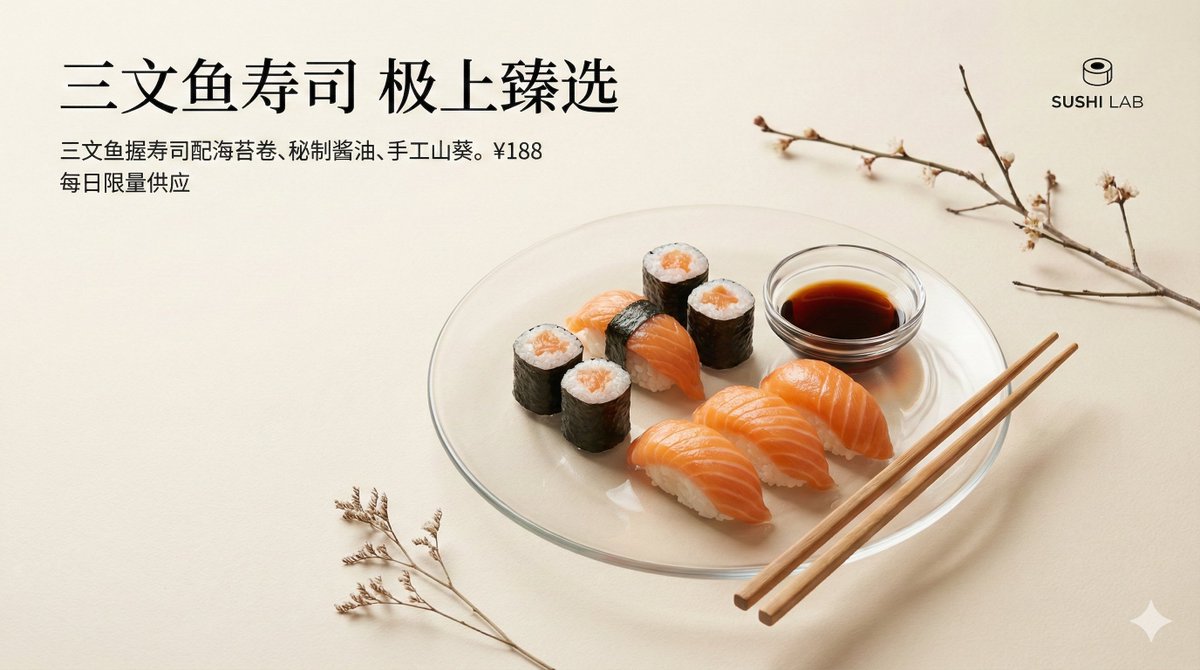
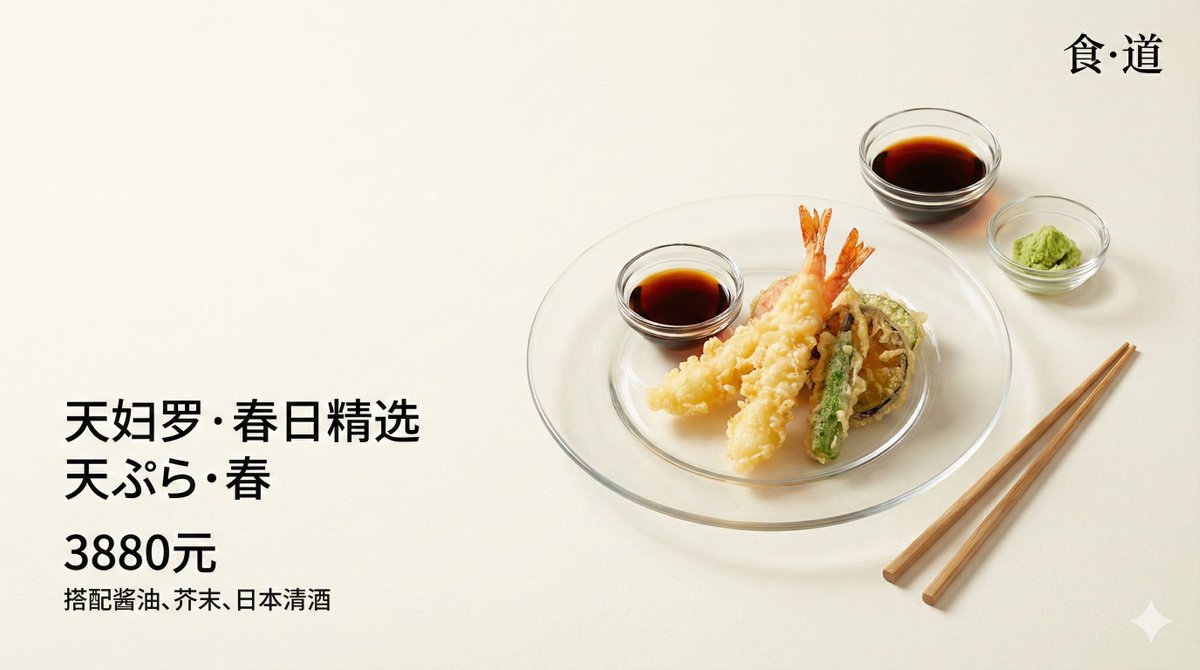
The setup was simple yet refined: tempura delicately arranged alongside a small glass bowl of soy sauce and another of mustard, with two chopsticks placed neatly beside them. The background was a pure cream-milky white, leaving ample negative space that felt calm and luxurious. To the left, sleek black sans-serif typography introduced the dish name, price, and pairing suggestions, while a tiny minimalist logo occupied the top right corner. The entire composition was illuminated with soft studio lighting, casting gentle, realistic shadows that added depth without overpowering the scene.
What struck me most was how this minimalist approach conveyed a sense of sophistication and exclusivity, almost like a page out of a high-end fashion magazine. The subtle plant motifs and delicate Chinese typography enhanced the mood, creating an ethereal yet sumptuous atmosphere. This wasn’t just about food photography—it was a masterclass in luxury graphic design tailored for the culinary world.
Trying this style myself, I found it surprisingly accessible yet impactful. The restraint in design elements forced me to focus more on lighting, composition, and typography harmony. It’s clear why such visuals would work wonders for restaurant branding or promotional materials: the food becomes the star, framed by elegant simplicity.
For creators aiming to use AI for image generation, this prompt is a great example of how specifying lighting, layout, and ambiance can elevate results. Avoid cluttering the scene and embrace negative space to let your subject breathe. Small adjustments like soft shadows and subtle textures add realism and sophistication. If you’re exploring text to image tools, this style can inspire your next AI image generator project, helping you craft visuals that feel both modern and refined.
You can find the full prompt here: ✨Prompt✨
Tips for Using Minimalist Food Photography Prompts
- Focus on clean backgrounds with ample white or cream space.
- Use soft, natural studio lighting to create gentle shadows.
- Incorporate simple, modern typography that complements the food.
- Balance composition carefully—let the dish breathe without overcrowding.
- Add minimal decorative elements like subtle logos or plant motifs to enhance elegance.
Exploring these elements in your AI art creator can help you generate visuals that are not only appetizing but also visually compelling. If you want to dive deeper, check out more about image generation techniques and how to use prompt adjustments effectively.