From Stapler to Sneaker: The Magic of Nano Banana Pro
When I first heard about the Nano Banana Pro prompt that can convert everyday objects into hype sneakers or puffer jackets, I was beyond intrigued. As someone deeply involved in the AI visual creation scene, I decided to test it out on a wild mix: a stapler, a marble run, a bitcoin, and even a ramen meal with eggs. The results were unexpectedly stunning, pushing the boundaries of what’s possible with text to image AI.



You can find the full prompt here: ✨Prompt✨
The prompt works by analyzing the input object's color palette, material physics, and key features, then applying a design language that fits the object’s nature. For rigid household items like my stapler, the AI used a “Hard-Surface Integration” approach. This meant the sneaker took on the stapler’s sleek red plastic casing as the upper material, metal hinges became part of the sole’s structure, and the stapler’s logo transformed into subtle branding tags. The marble run, with its industrial vibe, inspired a deconstructivist design featuring raw edges and exposed stitching.
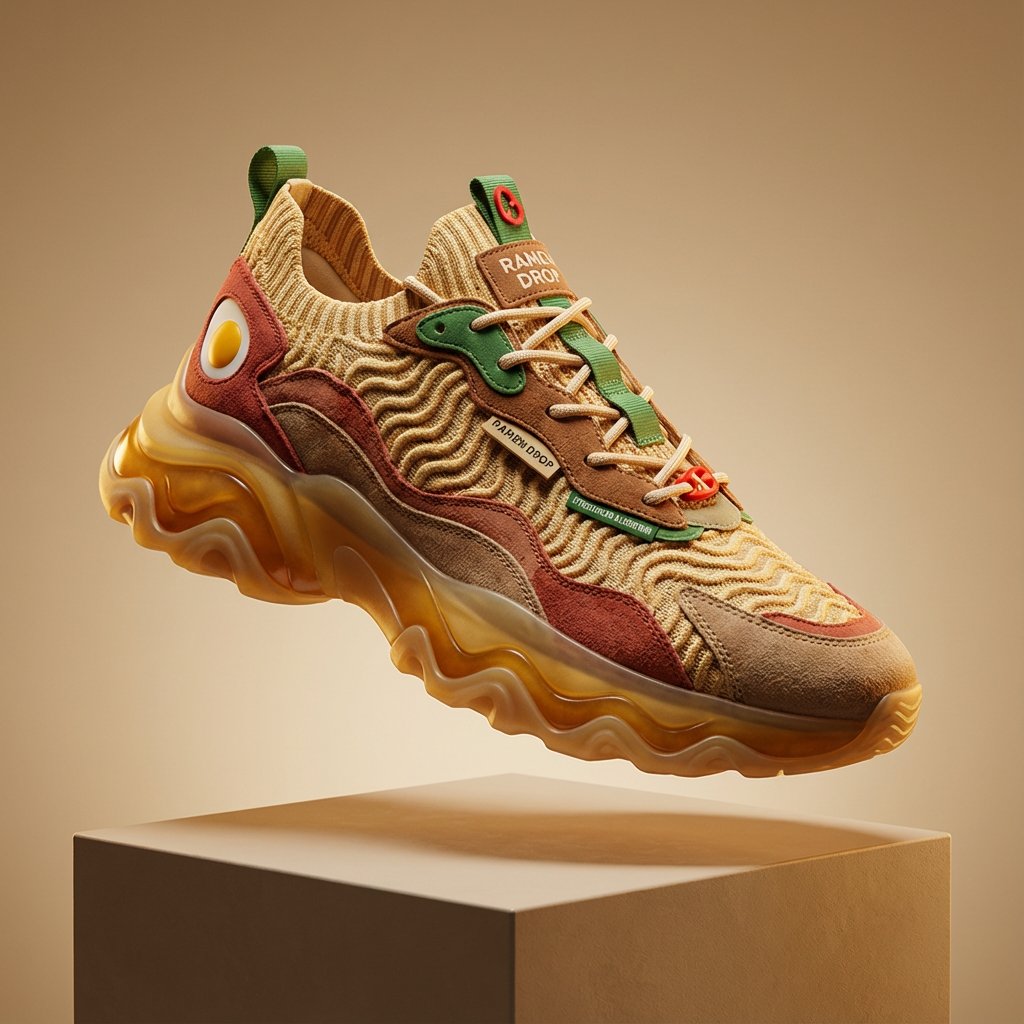
The organic textures of the ramen and eggs brought a totally different energy. Here, the AI applied bio-mimicry by turning the soft, wavy curves of noodles and the glossy egg yolk into voluminous, curved sneaker details. It felt like wearing art inspired by nature itself.
Seeing these everyday objects morph into what look like manufactured, limited-edition sneakers was surreal. The AI’s cinematic lighting and 8K resolution studio shots made each design feel ready for a hype drop on the streets of New York.
What really stood out to me was how the AI respected the object's original material physics and color palette, making the sneakers feel authentic, not just random mashups. This approach opens up exciting possibilities for content creators like me who want to explore new visual styles while experimenting with AI prompt adjustments.
If you’re curious about how to use prompts like this for your own image generation projects, focusing on the object's physical traits and letting the AI apply design languages based on those traits can yield the most realistic results. Avoid generic prompts that don’t specify material or texture details, or you risk getting flat, unconvincing images.
For anyone looking to dive into AI-driven streetwear concepts or just experiment with transforming objects into wearable art, this Nano Banana Pro prompt is a game-changer.
Check out more about AI art creators and image generation tools that can bring your wildest ideas to life: