Recently, I experimented with an AI prompt to create a pair of vintage-style movie tickets for Inception (盗梦空间). I wanted something that felt like a real collectible artifact, blending nostalgia with professional product photography aesthetics. The result was beyond what I expected.
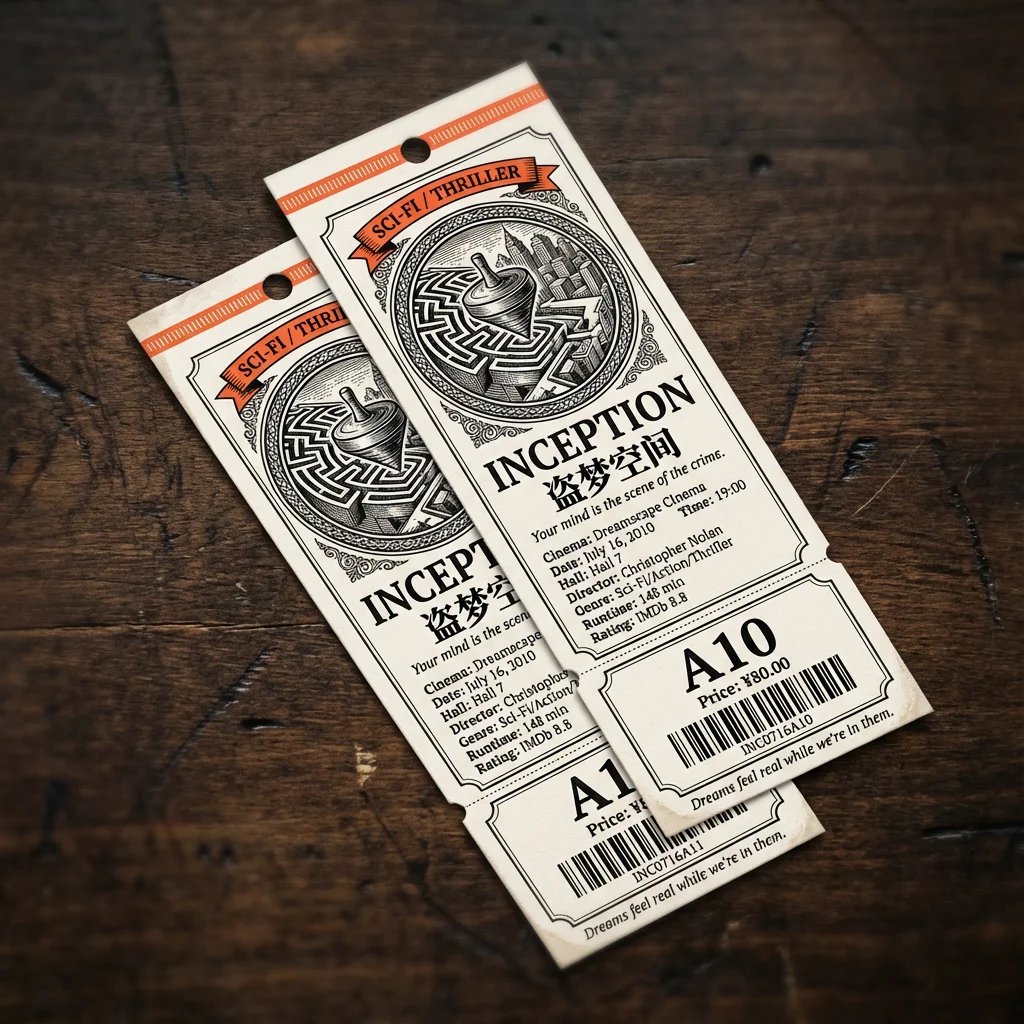

The prompt specified two tickets slightly overlapped on a dark wood table, shot from above with soft natural light and shallow depth of field. This setup gave the image a warm, intimate vibe, making the tickets feel like cherished keepsakes. The tickets themselves were designed as 200g cream-colored art paper with linen texture, matte finish, and a vertical bookmark ratio. The perforated tear line was subtly detailed, adding authenticity.
What fascinated me was how the AI handled the design structure. The top ticket featured an orange binding hole decoration, a bold type label banner, and a highly symbolic black-and-white woodcut-style illustration capturing the movie’s theme. Both Chinese and English titles were crisply printed along with the classic tagline. The detailed screening info—cinema, date, time, hall, director Christopher Nolan, genre, runtime, and rating—felt perfectly accurate and well-balanced.
The bottom section, the ticket stub, included adjacent seat numbers, price, serial code, barcode, and a decorative quote at the bottom. The black ink combined with vibrant orange highlights on the cream paper gave the tickets a sophisticated, high-quality offset print look with just enough ink bleed into the paper texture to feel tactile.
One key insight was how crucial prompt specificity is for image generation. The AI nailed the fine details like the perforation lines and rich borders, which many prompts tend to miss. Also, natural lighting and surface textures made the photo feel like a genuine snapshot rather than a sterile digital render.
This project taught me valuable image generation tips for future AI art creator endeavors: always include material textures, lighting instructions, and precise layout details. Avoid vague descriptions to prevent prompt mistakes like missing text or flat visuals.
Overall, using AI for such a high-info-density, symbolically rich prompt showed me how to harness text to image tools for creating collectible visual content that’s ready for social sharing or portfolio display.
You can find the full prompt here: ✨Prompt✨
For more inspiration on how to use prompt-driven AI generation, check out these resources:
- AI image generator for diverse creative projects
- text to image techniques to refine your visuals
- AI art creator tips to master prompt crafting