Discovering a New Way to See Myself Through AI
Recently, I experimented with an AI image generator using a prompt that asked for a cinematic, realistic studio scene featuring a young woman standing beside an easel, quietly observing an oil portrait of herself. The result was unexpectedly moving—an image that felt both intimate and artistically rich.
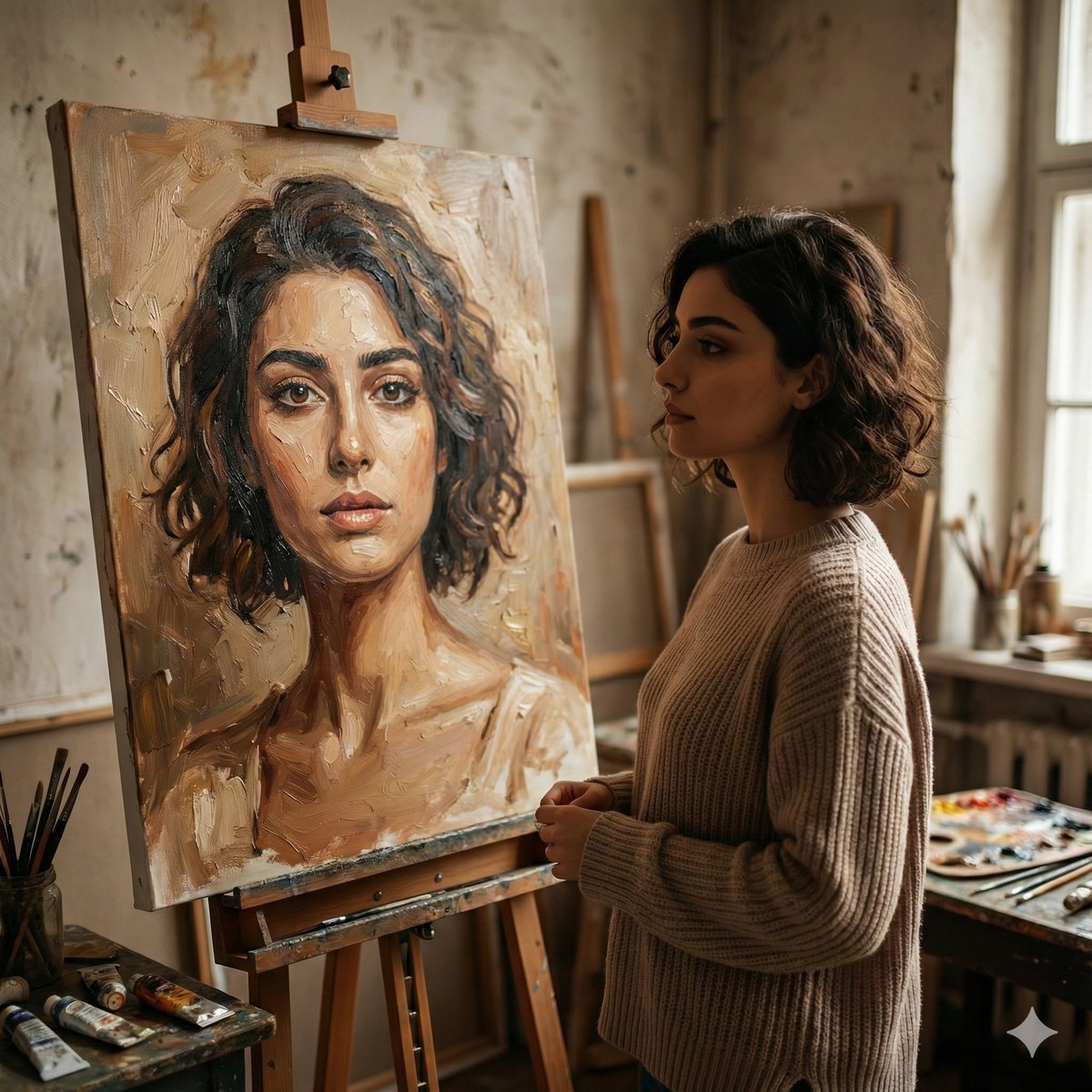
The scene is bathed in natural window light that casts gentle shadows, creating a calm, introspective mood. The woman in the image wears a cozy neutral sweater, and her short wavy hair frames her face softly, adding to the quiet warmth. The oil painting she’s observing is rendered with expressive brushstrokes and warm earthy tones, capturing emotional depth that felt surprisingly authentic for an AI-generated image.
What struck me most was how the AI captured the fine details of the artist’s workspace—the paintbrushes, palettes, and textured walls—giving the entire composition a genuine fine-art atmosphere. The shallow depth of field and painterly realism brought a cinematic quality, with soft highlights and warm color grading enhancing the overall mood.
Insights on Using AI for Artistic Self-Reflection
This project wasn’t just about creating a pretty picture. It felt like a moment of self-reflection, visualized by AI in 4K quality and a perfect square 1:1 aspect ratio that suits social media perfectly. I learned a few things about prompt adjustments to get the lighting and texture just right, especially emphasizing natural light and painterly effects to avoid the common pitfalls of overly digital or flat images.
Using a photo of myself as the base input helped the AI maintain true likeness while allowing it to reinterpret the scene with emotional depth. This balance between realism and artistry is tricky but rewarding, and it’s a fantastic example of how text to image AI can be used beyond simple portrait generation.
For creators curious about how to use prompt-based AI for visual storytelling, focusing on mood, lighting, and environment details can make a huge difference. This prompt by style and use case also taught me how important it is to experiment with words that evoke atmosphere rather than just physical descriptions.
Why This Matters for Creators
As someone who often works with visuals, this AI-driven process opened my eyes to new possibilities—combining personal photography with AI prompts to create cinematic, emotionally resonant images. It’s a powerful tool for artists, storytellers, and anyone looking to explore self-expression through image generation.
If you want to try something similar, I recommend checking out an AI image generator that supports detailed prompt inputs. Adjust your prompts carefully, keep testing different lighting and texture keywords, and don’t be afraid to add artistic elements like brushstrokes or color grading to enrich the final output.
You can find the full prompt here: ✨Prompt✨