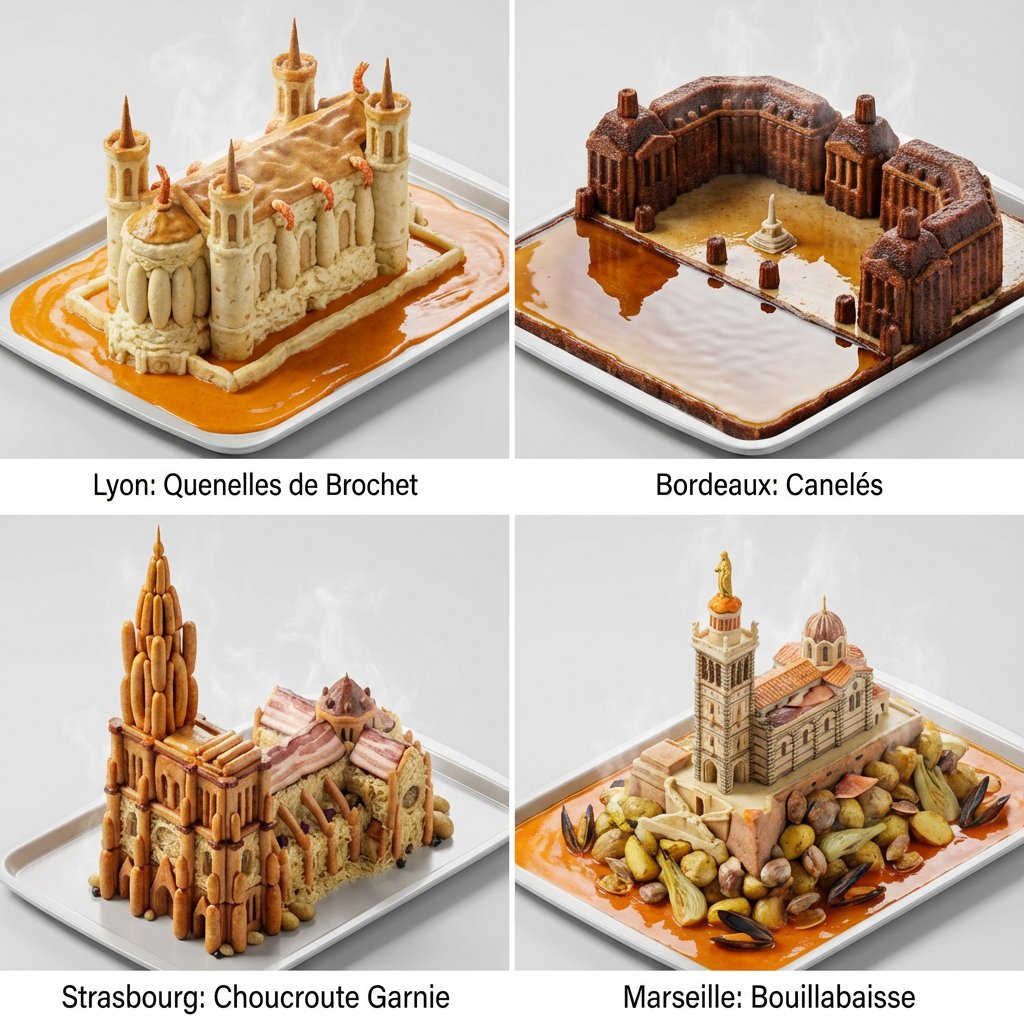
One of the most fascinating ways I’ve found to explore culture is by merging geography with food — literally turning cities into edible art. Recently, I dived into France, but instead of Paris, I focused on four cultural hubs that often fly under the radar. The challenge was to capture the spirit of each place by recreating its iconic landmarks entirely from local ingredients and famous dishes.
You can find the full prompt here: ✨Prompt✨
Why Food Dioramas?
Transforming architectural landmarks into edible dioramas isn’t just visually stunning; it’s an immersive way to connect with a place’s culinary heritage. Each city’s unique textures, colors, and flavors shape the miniature landscape, making the image mouth-watering and deeply authentic.
The Four French Cities I Chose
- Annecy: Known as the “Venice of the Alps,” I recreated the Palais de l’Isle using savory cheeses and crusty breads. The clear alpine waters were represented by translucent gels infused with local herbs.
- Colmar: This charming Alsatian town’s half-timbered houses came alive with smoked sausages and pretzel bread, while the famous tarte flambée inspired the roof textures.
- Rocamadour: The cliffside sanctuary was crafted from creamy Rocamadour goat cheese combined with walnut-studded bread, echoing the region’s rustic flavors.
- Bayonne: I built the city’s historic ramparts using Bayonne ham slices layered with dark rye bread, and the Adour river flowed with a glossy red wine reduction.
Visual and Technical Insights
Capturing these edible cities required balancing the physical properties of food with architectural form. For example, porous breads replaced stone walls, fibrous vegetables shaped roofs, and sauces mimicked waterways. Lighting was key too — warm backlighting emphasized steam and translucency, enhancing the freshness and gloss of the ingredients.
Using a tilt-shift lens and macro photography gave each panel a miniature effect, making viewers feel like they’re peering into a delicious, edible world. The isometric view ensured every landmark was perfectly showcased in the 2x2 grid layout.
Lessons Learned
One tricky aspect was avoiding inedible or unrealistic materials — the prompt specifically excluded plastic or raw meat unless appropriate, so I leaned heavily on local cheeses, breads, and sauces. This forced creative thinking to replicate architectural details purely through texture and color in food.
Overall, this experience deepened my appreciation for both regional French cuisine and the stories cities tell through their landmarks. It’s a fresh way to use AI prompt crafting for text to image generation, blending food styling with geography expertise.
If you’re curious about how to use prompts like this or want tips on adjusting them for your own projects, exploring AI image generator tools is a great start. Whether you’re a content creator or just love food art, combining these elements opens new creative doors.
For more inspiration, check out other prompts by style or use case, and dive into the world of AI art creator techniques for stunning image generation results.