Discovering Cinematic Food Photography with AI
As someone constantly exploring new ways to create striking visuals, I recently took a deep dive into AI-edited food photography. Using a prompt that demanded extreme micro-detail and ultra-high definition, I aimed to capture food in a way that’s both hyper-realistic and cinematic. The results were stunning—floating tacos, sizzling grilled skewers, and delicate sushi rolls all rendered with a crispness and vibrancy that I hadn’t seen before.
You can find the full prompt here: ✨Prompt✨
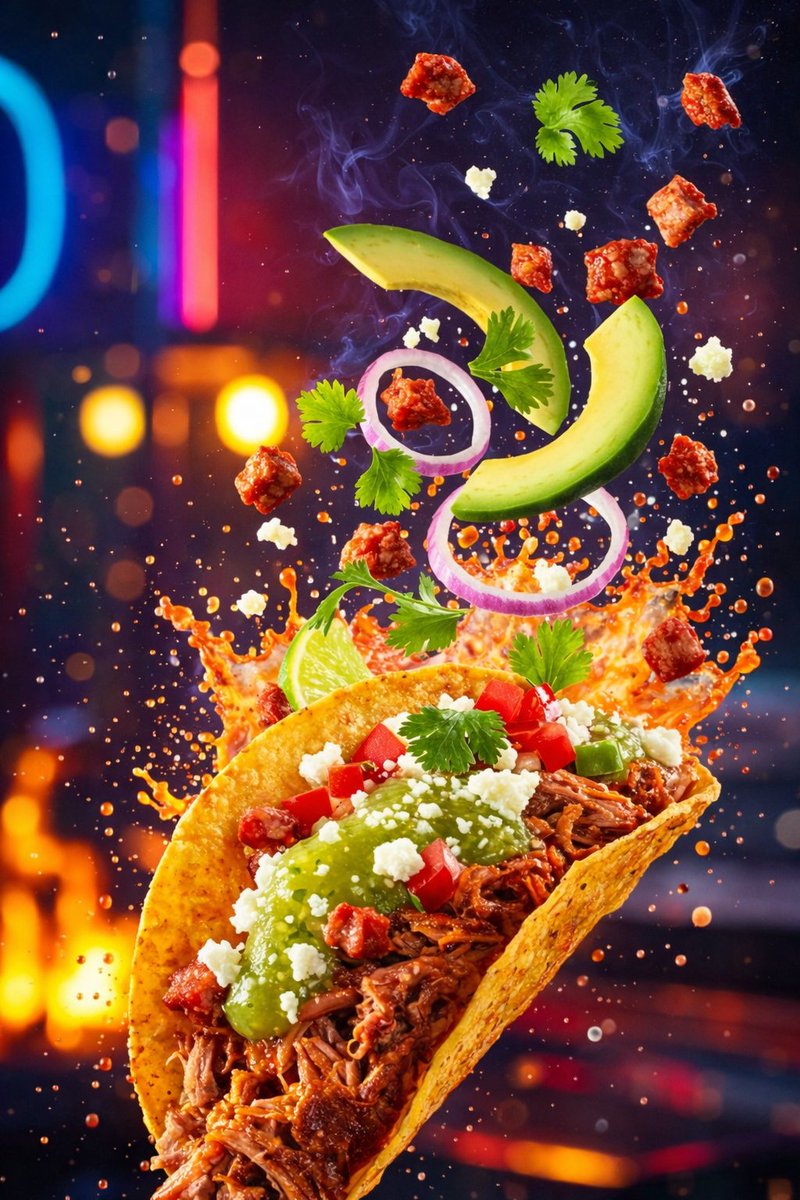
The Floating Taco: A Burst of Motion and Texture
The first image featured a single hard-shell taco, perfectly suspended in mid-air with ingredients frozen in dynamic motion. The golden-yellow shell’s crisp texture was so vivid I could almost hear the crunch. Floating garnishes like avocado slices and purple onion rings added depth, while an orange-red sauce splash erupted dramatically behind the taco. The high-contrast studio lighting created glossy reflections on the meat and sauce, making the entire composition pop against a dark background with neon-like bokeh lights. This image taught me how lighting and motion suspension can transform a simple dish into a visual story.
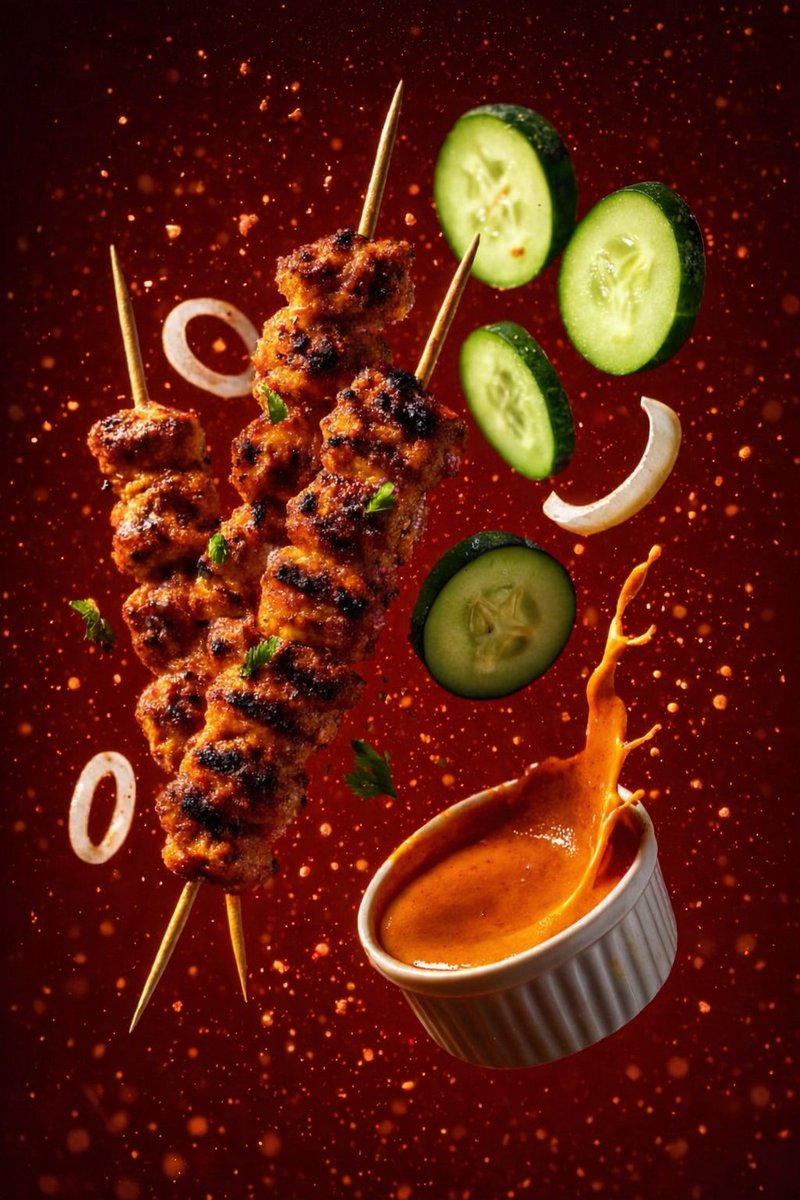
Grilled Skewers Captured with Dramatic Flair
Next, I explored three grilled meat skewers, each slightly angled with the center skewer as the focus. The wooden sticks and charred meat texture came alive under dramatic directional lighting, emphasizing their uneven surfaces and juicy sheen. Suspended cucumber slices and thin onion rings added a fresh contrast, while a thick orange sauce splash rising from a ramekin brought movement and energy. The solid deep red background with scattered particles gave the scene an intimate, almost smoky atmosphere. This experience highlighted how careful layering and lighting can evoke a tactile, mouthwatering feel.
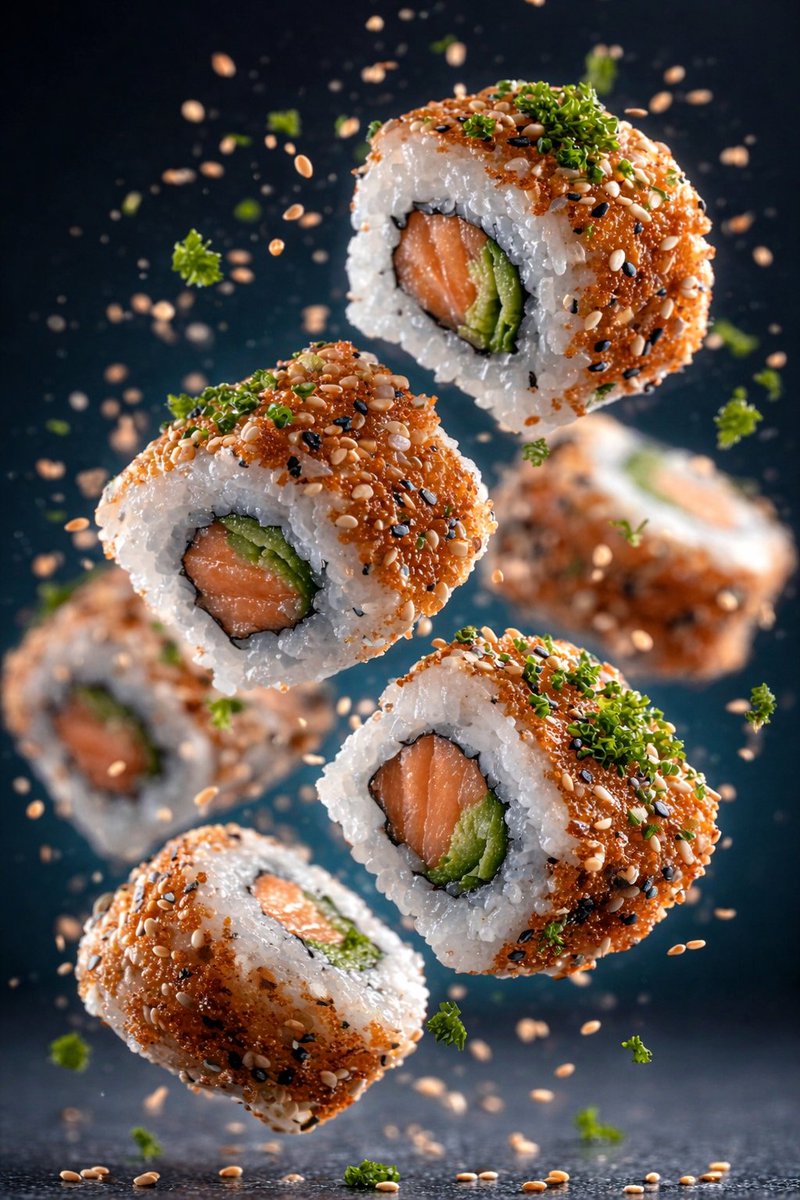
Delicate Sushi Rolls with Crisp, Natural Detail
The final composition was a floating cluster of four sushi rolls with uneven spacing, creating a natural depth of field. The white rice outer layer and dark seaweed interior framed vibrant orange fish slices and green avocado fillings. Toasted sesame seeds and finely chopped herbs floated around, adding texture without overwhelming the image. Soft, crisp studio lighting kept the front sushi sharp while gently blurring the rear rolls, set against a dark blue-grey background that was both clean and particle-rich. This image reinforced how subtlety and precision in prompt adjustments bring out refined elegance.
Reflections on AI-Powered Food Visuals
What stood out most throughout this process was the AI image generator’s ability to maintain enhanced realism without exaggerating colors or details. The ultra-sharp clarity and minimal noise made every element—from the sheen on meat to the tiny crumbs on sushi—feel tangible. Also, the prompt’s strict style constraints helped preserve the natural composition while introducing cinematic drama. I learned valuable image generation tips like balancing lighting types and incorporating motion suspension to add energy.
For creators interested in text to image workflows, this project was a reminder that the right AI prompt adjustments can turn everyday subjects into extraordinary visuals. Avoiding prompt mistakes like over-saturation or cluttered backgrounds ensured the focus stayed on the food, making it irresistible.