Exploring Global Flavors Through AI-Generated Culinary Books
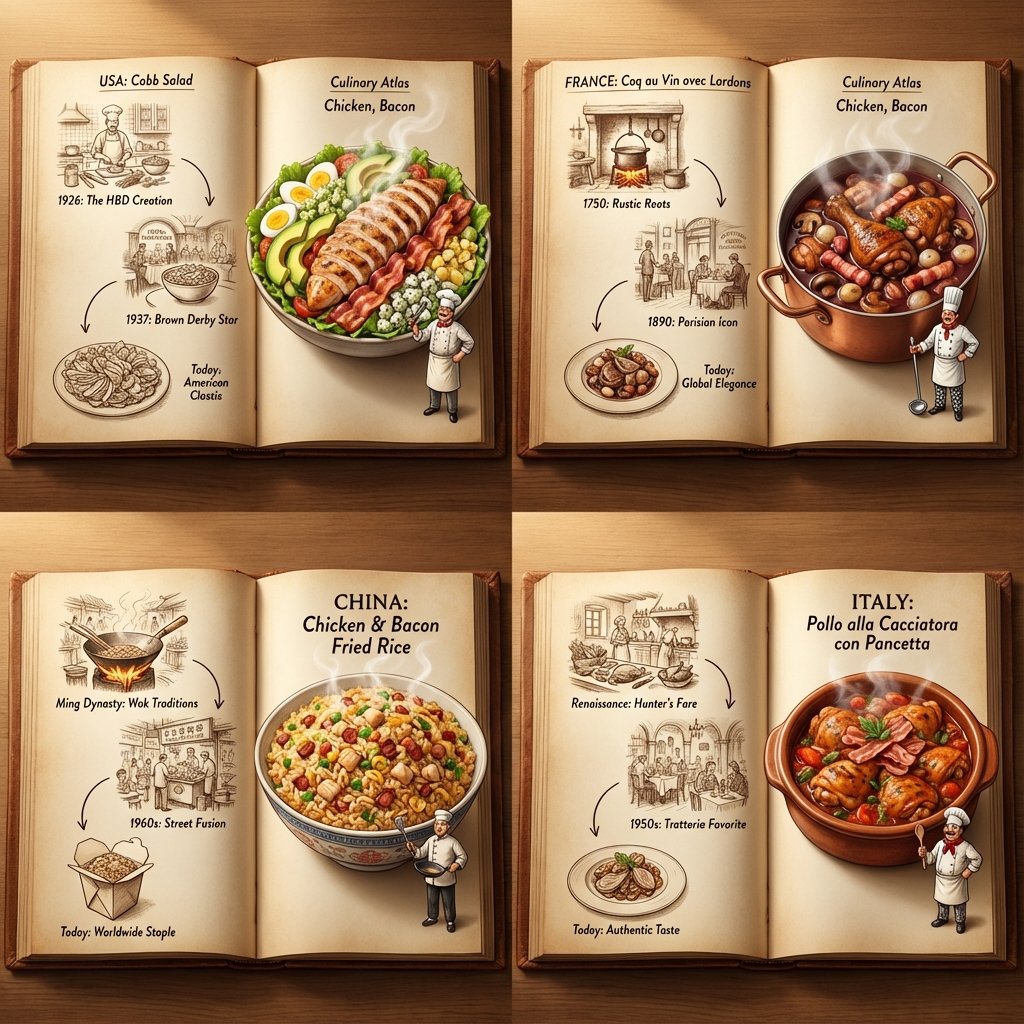
As someone who loves both food and visual storytelling, I was instantly intrigued by an AI image prompt that challenges text-to-image models to create a "Culinary Atlas"—a 2x2 grid featuring open book spreads from four different countries, each showcasing a famous dish built around simple ingredients like chicken and bacon.
The concept is brilliant: on the left page of each book spread, vintage sepia ink sketches illustrate the dish’s history, tracing its evolution from the 19th century to modern times. On the right page, a 3D pop-up diorama bursts to life, depicting a steaming, hyper-realistic version of the dish with a miniature chef standing proudly beside it. This blend of flat historical art and tangible 3D food models, all under cinematic top-down lighting, creates a vivid contrast that truly brings culinary culture to life.

You can find the full prompt here: ✨Prompt✨
In my experiments comparing Nano Banana Pro and GPT Image 1.5, I was fascinated by how each AI interpreted the instruction to analyze ingredients and select culturally iconic dishes. Both produced the required 2x2 grid layout, but the nuances in lighting, detail, and the emotional feel of the pop-up chefs varied noticeably.
GPT Image 1.5 excelled in creating intricate sepia sketches that looked like authentic vintage etchings, with clear timelines and recipe elements finely rendered. Its 3D pop-ups had a slightly softer, more painterly texture, which felt warm and inviting but less hyper-realistic.
Meanwhile, Nano Banana Pro delivered more strikingly detailed 3D pop-ups. The food appeared almost tangible, with steam effects and textural depth that made me want to reach out and grab a bite. Its sepia sketches were a bit simpler but still charming and consistent across all four panels, keeping the series unified.
What truly stood out was the way the prompt’s lighting instructions were followed. The cinematic top-down light cast delicate shadows that enhanced the depth difference between the flat, old-style left pages and the vibrant, dimensional right pages. This lighting made the miniature chefs and food pop-ups feel like tiny theatrical scenes.
From a creator’s perspective, this prompt is a goldmine for anyone wanting to showcase how AI can blend historical storytelling with modern visual effects. It also highlights key image generation tips—like specifying lighting and layout rules—to get consistent, high-quality results across multiple panels.
The biggest challenge? Balancing detail on both pages without making the images feel cluttered. It’s easy for either the sketches or the pop-ups to overpower the other. Adjusting prompt emphasis and iterations helped me find a sweet spot.
If you want to experiment yourself, this prompt is a perfect example of how to use prompt engineering to push the boundaries of AI art creators. Whether you’re documenting food history, designing unique menus, or simply exploring cultural art, combining flat and 3D elements in a grid format creates a fresh, immersive experience.
For more inspiration and tools, check out some great resources on AI image generator, text to image, and image generation platforms that can help bring your creative ideas to life.