Visualizing Stories Through Resin Sculptures
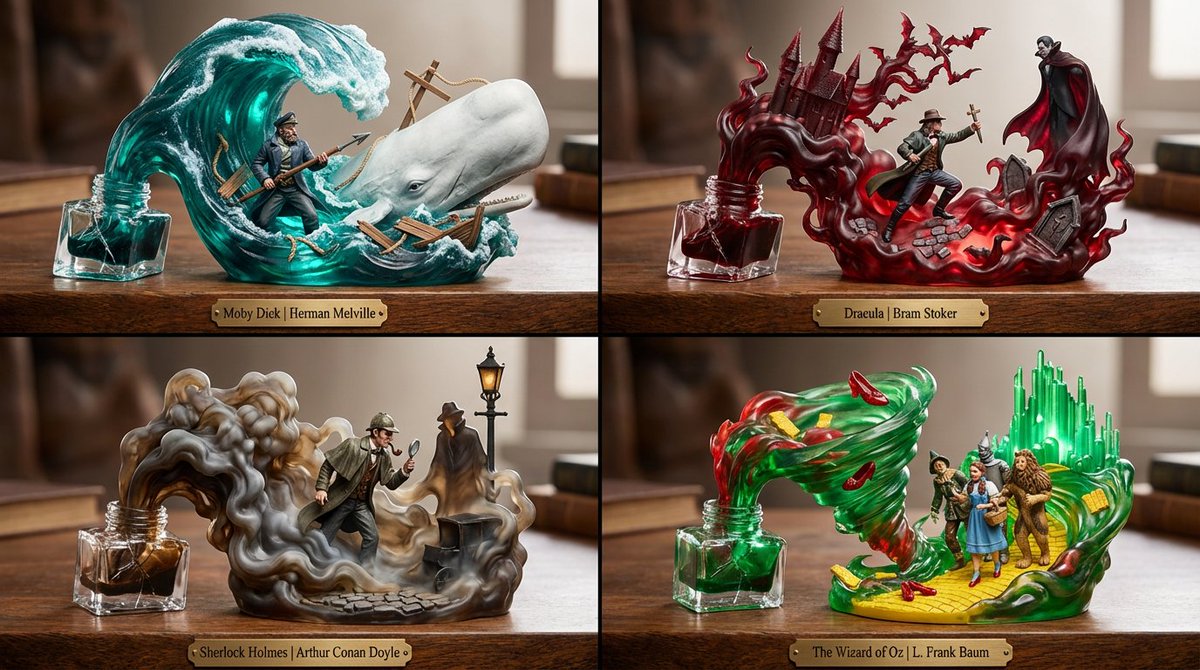
As a content creator deeply fascinated by how visuals can reshape storytelling, I recently experimented with a unique AI prompt that challenged me to merge sculpting, color theory, and fluid effects into one cohesive piece. The concept was to create a 2x2 grid of hyper-realistic resin statues, each representing a classic literary tale, all emerging dynamically from spilled ink on an ornate wooden desk.
You can find the full prompt here: ✨Prompt✨
The Creative Process
This project began with selecting four distinct genres and pairing each with a tailored color palette and scene:
- Moby Dick: Deep Teal, Seafoam Green, White – Ahab lunging with his harpoon, surrounded by a translucent wave curling over him.
- Dracula: Oxblood Red, Charcoal, Gold – The vampire framed by swirling red ink smoke forming a gothic castle and bats.
- Sherlock Holmes: Sepia, Tobacco Brown, London Grey – Holmes emerging from grey fog with a gas streetlamp embedded in the resin.
- Wizard of Oz: Emerald Green, Poppy Red, Yellow – Dorothy and the witch depicted with vibrant resin swirls.
The base for each sculpture was imagined as a heavy walnut desk, engraved with brass plates naming each classic. The spilled crystal inkwell, cracked and bursting, served as the source for the dynamic resin fluid that forms each story’s environment.
Visual and Technical Insights
The most magical part was the translucent resin ink, designed to glow softly from within. This subsurface scattering effect illuminated the solid hero figures, adding a layer of magical realism. It made the sculptures feel alive, as if the stories were literally leaping off the desk.
Embedding physical props like shattered ship planks in the teal wave or cobblestones in the red mist gave depth and context to each scene. These subtle details helped ground the ethereal resin forms in the tangible world of the stories.
Working with AI prompts that combine detailed instructions on color palettes, materials, and composition pushed me to think beyond traditional 2D images. It’s a reminder of how text to image and AI art creators can elevate visual storytelling by guiding image generation with nuanced, layered prompts.
Lessons Learned & Tips
- Balance detail and clarity: Overloading a prompt risks muddy visuals; here, the clear color palettes helped maintain distinct moods.
- Leverage lighting: The volumetric and subsurface lighting brought out textures and added depth.
- Use physical props strategically: Embedded elements anchor abstract resin forms to the narrative.
- Prompt adjustments: Iterating on fluid shapes and hero poses was key to capturing dynamic action without losing focus.
For anyone exploring AI-driven image generation or interested in sculptural visualization, this approach offers a fascinating bridge between narrative and visual art.
Discover more about AI image generator tools and how precise text to image prompts can transform concepts into vivid creations. Dive deeper into the world of AI art creator platforms and master the art of image generation today.