Why I Tried Recreating Tang Dynasty Fashion with AI
As a content creator passionate about blending historical aesthetics with modern AI tools, I wanted to dive into the beauty of Tang Dynasty clothing. This era's fashion is unique and elegant, and I was curious if AI could capture not just the garments but the entire atmosphere—especially with the delicate snowfall and cinematic lighting in mind.
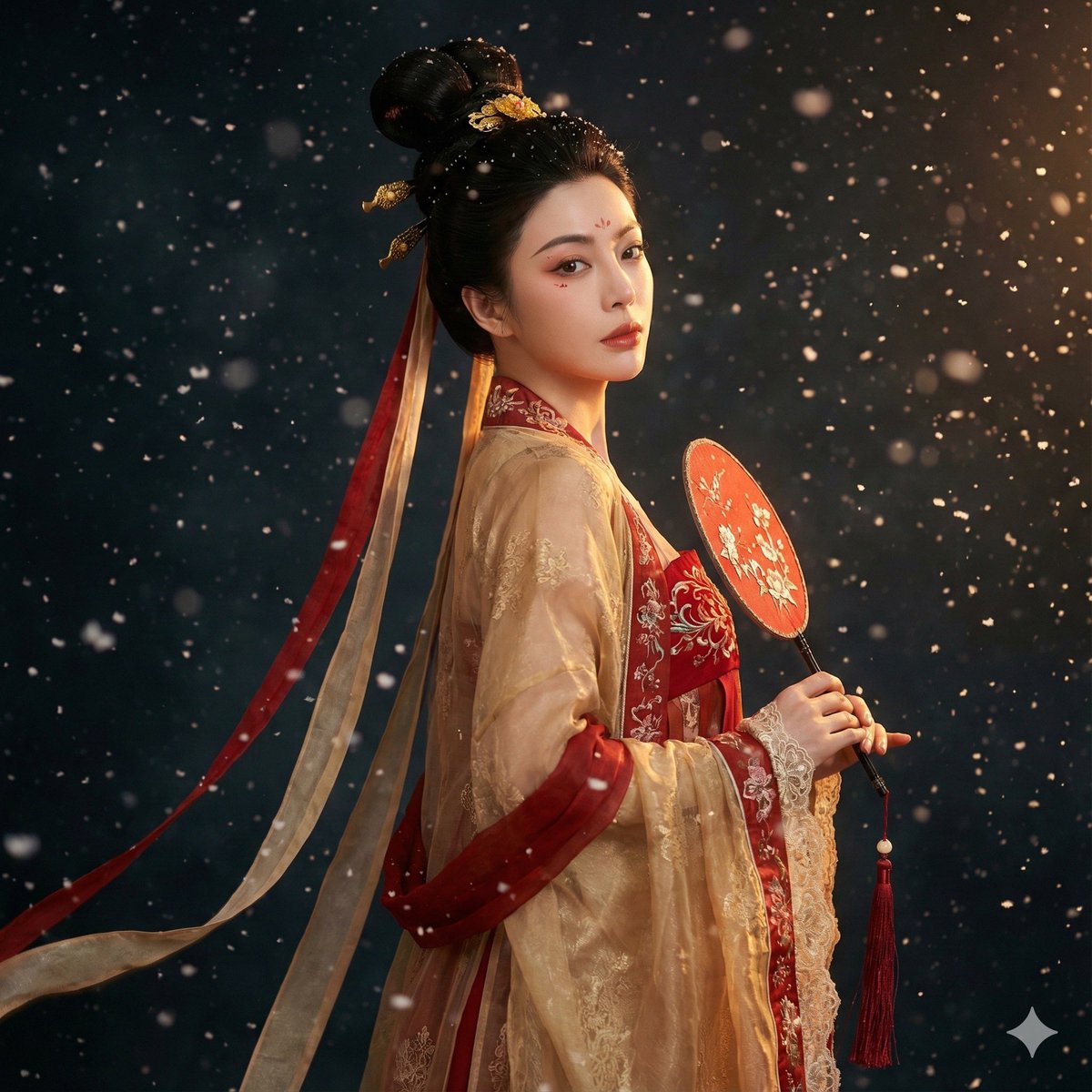
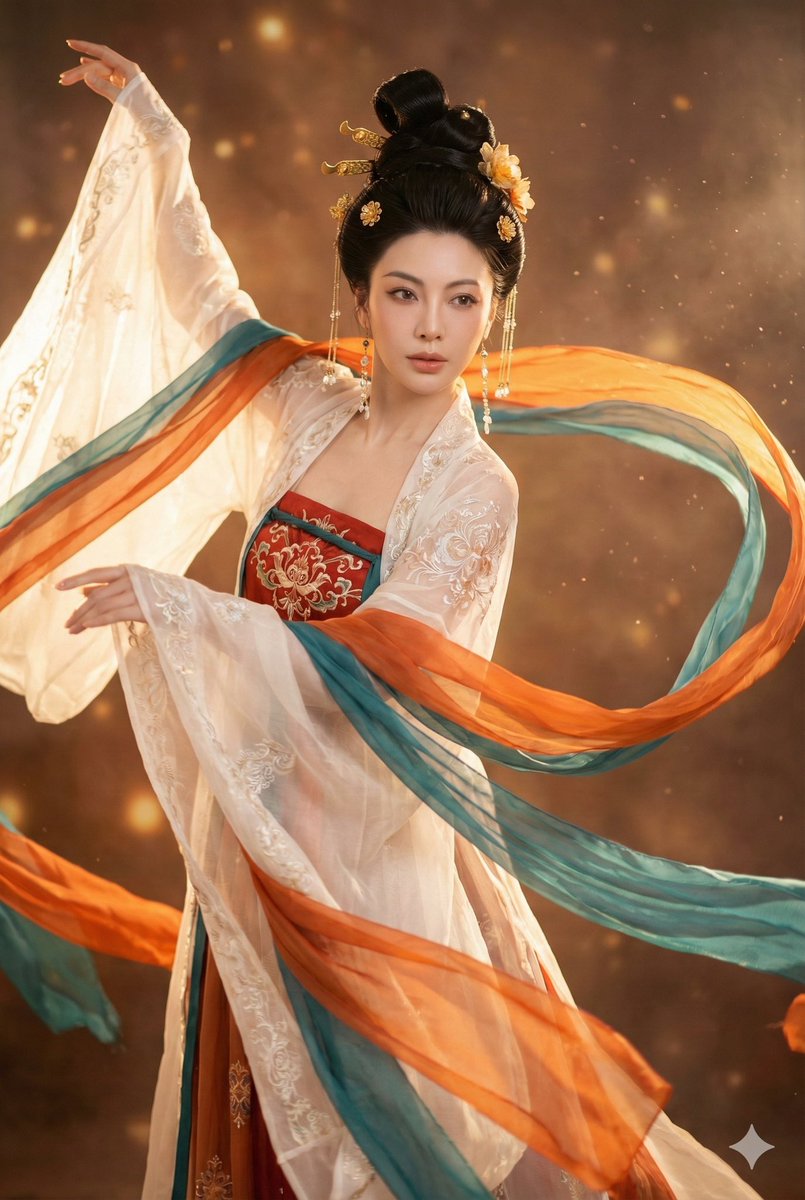
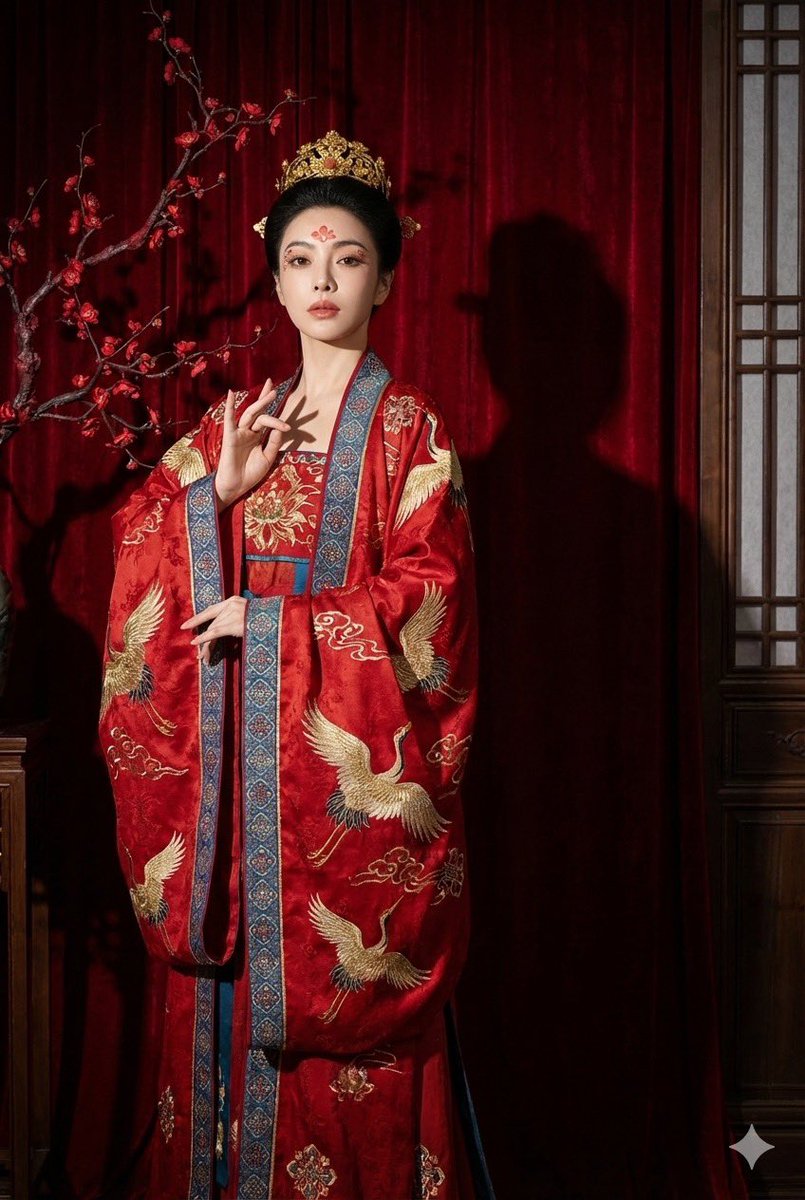
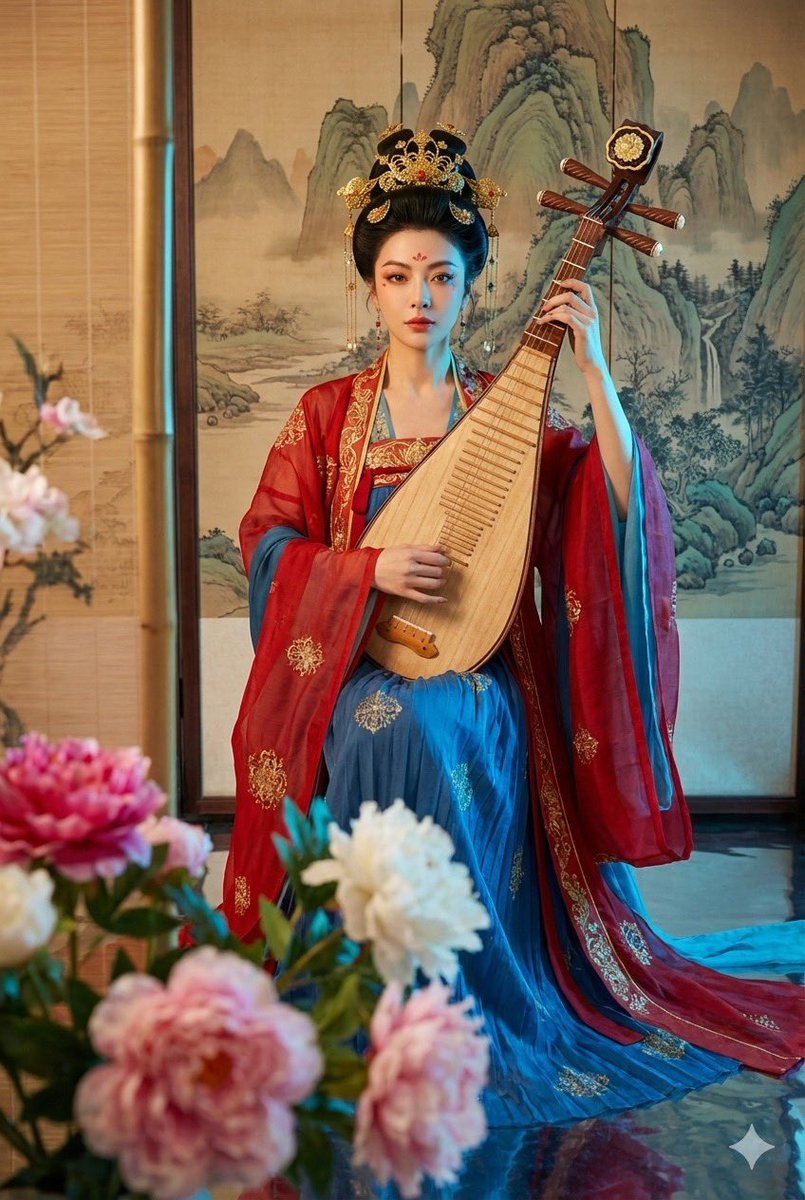
The prompt I used was designed to generate a hyper-detailed, photorealistic portrait of a young East Asian woman dressed in a traditional qixiong ruqun, a classic Tang Dynasty attire. The image features her holding a red embroidered round fan and looking back over her shoulder against a softly falling snow scene with a moody black background. You can find the full prompt here: ✨Prompt✨
Visual Details That Made This Portrait Stand Out
The AI nailed intricate textures — from the layered silk fabric of the low-cut bodice to the sheer, flowing wide sleeves. The delicate embroidery and the translucent quality of the outer sleeves added authenticity and depth. The high bun hairstyle, adorned with peony floral accessories, golden bushuyao hairpins, and ornate combs, perfectly framed the model’s face, emphasizing her elegant Tang-style makeup with traditional floral forehead decorations.
The snowy night setting introduced ethereal charm, with natural-looking snowflakes caught mid-fall and soft rim lighting that highlighted the model’s pale, soft skin textures. The shallow depth of field and 85mm focal length created a cinematic quality that felt like a masterpiece photograph rather than a digital render.
What I Learned About AI Prompting for Historical Fashion
This project reminded me how critical it is to maintain character consistency, especially when generating multiple images. The prompt emphasized keeping the same facial features, hairstyle, and body structure across shots to avoid jarring differences. It also highlighted common pitfalls, like avoiding Ming-style collars or modern makeup, which would break the historical feel.
Adjusting lighting and fabric flow parameters helped bring natural dynamics to the silk and gauze materials, while ensuring the frozen snow maintained realistic motion. These prompt adjustments are essential for anyone aiming to create believable historical portraits using AI.
If you’re interested in experimenting with similar styles or want tips on prompt engineering, check out this AI image generator — it’s been my go-to for text to image projects. The balance of photorealism and artistic mood here is inspiring for capturing any period fashion or visual mood.
Final Thoughts
Exploring Tang Dynasty fashion through AI image generation was a fascinating journey. It reinforced how AI is not just a tool for quick visuals but a means to deeply engage with cultural heritage and storytelling. The combination of careful prompt crafting, attention to historical accuracy, and leveraging advanced rendering techniques results in portraits that feel both timeless and fresh.
If you want to see more or have prompt ideas related to traditional fashions or cinematic portraits, feel free to leave a comment. Creating with AI is always an evolving experience, and sharing insights helps us all improve.
For more inspiration, check out these resources: AI art creator, image generation, and text to image.