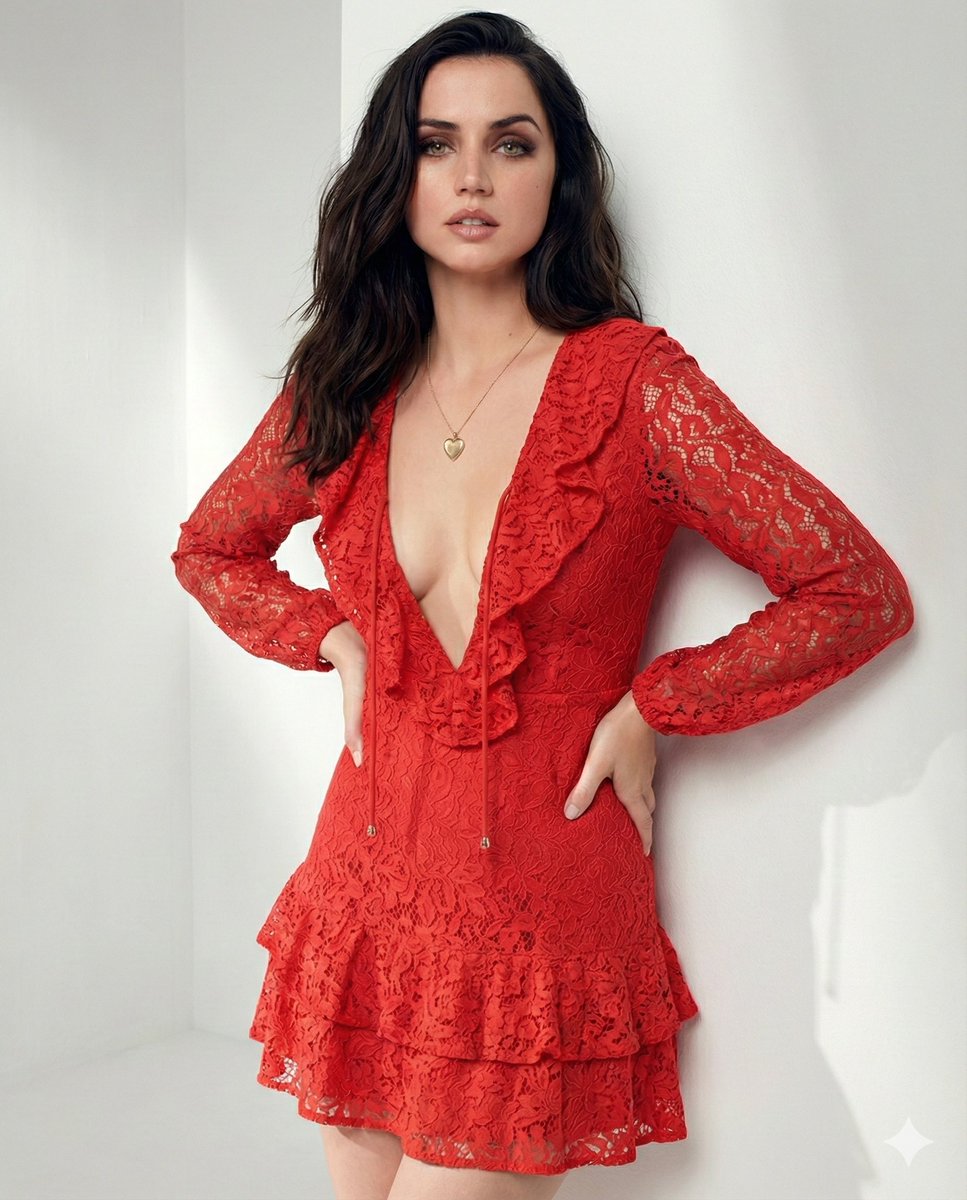
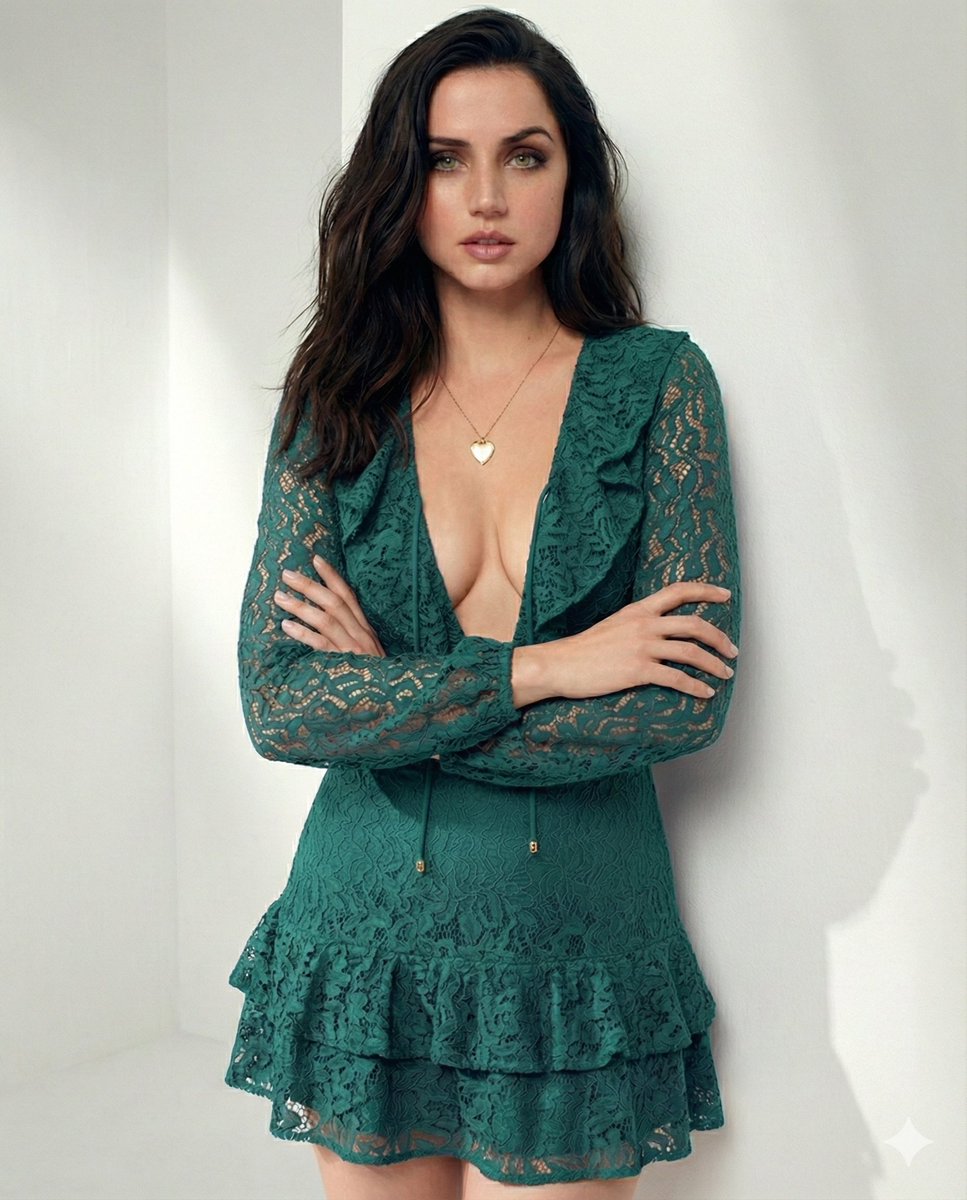
When I first decided to channel Ana de Armas’s captivating presence through AI image generation, I knew it had to be more than just a portrait. The goal was to capture her essence in a way that felt alive — a dynamic fashion moment frozen in time. Using a carefully crafted AI prompt, the result was an ultra-realistic, photorealistic masterpiece that truly stands out.
You can find the full prompt here: ✨Prompt✨
The Visual Story Behind the Image
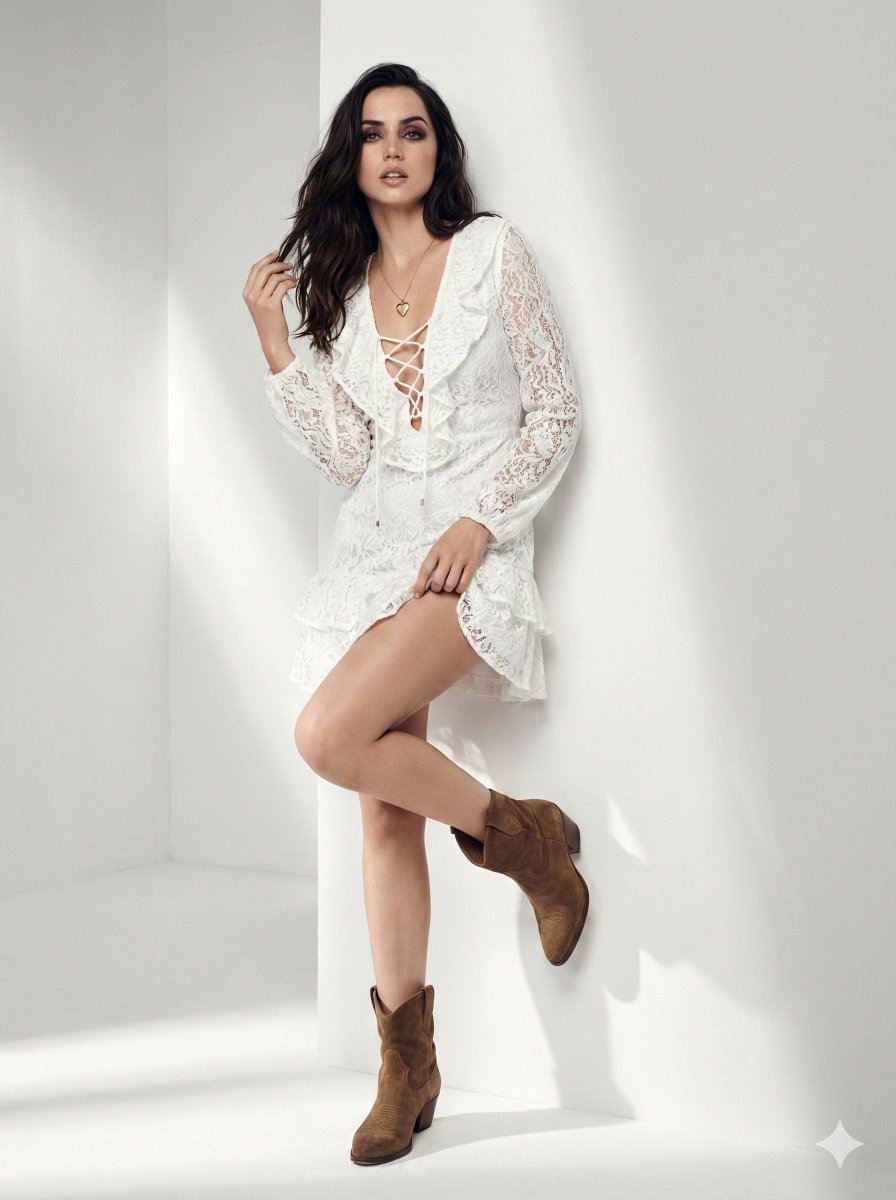
Picture this: Ana de Armas in a pure white mini dress, layered with airy ruffles that add movement and softness. The dress features a lace-up, very deep neckline that draws attention subtly, paired with long sleeves ending in ruffled cuffs. The rough brown suede ankle cowboy boots ground the look with an unexpected edge, while a delicate gold heart pendant adds a touch of warmth and femininity.
Her long, dark hair cascades naturally as she leans against a pristine white wall, one leg raised to the side in a confident, dynamic pose. One hand lifts the hem of her dress, teasingly exposing her legs, while the other touches her hair. Her lips are slightly parted, and her gaze meets the camera directly — a moment charged with presence and subtle allure.
Lighting and Technical Mastery
The lighting setup was crucial to bringing this image to life. A cinematic studio lighting approach combined high key and soft fill lights with rim and volumetric lighting to sculpt shadows and highlights beautifully. This technique emphasized textures — from the fabric’s delicate layers to the suede’s rugged texture — creating depth that feels almost tangible.
The image was generated with hyper-detailed focus, mimicking an 8K commercial photograph shot on a Canon R5 with an 85mm lens at f/2.0 aperture. The shallow depth of field isolates Ana from the white room’s minimalistic background, making her the undeniable focal point. This vertical, full-body composition works perfectly for fashion spreads and visual storytelling.
What I Learned About Prompt Crafting
One of the key lessons from this creation was the importance of specifying face and body consistency at 100%. This ensured the AI maintained Ana’s likeness flawlessly throughout the image. Also, balancing detailed physical attributes with setting and lighting instructions helped avoid common prompt mistakes like unnatural poses or inconsistent textures.
Adjusting the prompt to include both the emotional expression — lips slightly parted, direct gaze — and fashion details created a natural, believable scene rather than a static portrait. This approach is invaluable if you want your AI-generated images to feel like high-end editorial photos rather than just digital renderings.
Final Thoughts on Using AI for Visual Creation
Exploring this prompt showed me how powerful AI can be for producing high-quality, ultra-realistic images that rival professional photography. Whether you're a content creator, fashion enthusiast, or visual artist, refining your prompt with precise details and technical specs can unlock stunning results.
For those curious about diving into AI image generator tools or experimenting with text to image prompts, focusing on lighting, pose, and texture details is key. The balance between creative vision and technical instructions defines the quality of the final artwork.
Interested in exploring more about how to use AI art creators? Check out these helpful resources on image generation to get started.