Which Mood Do You Have Today?
As a content creator constantly experimenting with AI image generation, I recently dived into portraying authentic human emotions through a hyper-realistic style. The goal was simple yet challenging: capture four distinct moods of the same person in a single 4-photo collage. This project wasn’t just about aesthetics; it was an emotional snapshot that felt both personal and visually striking.
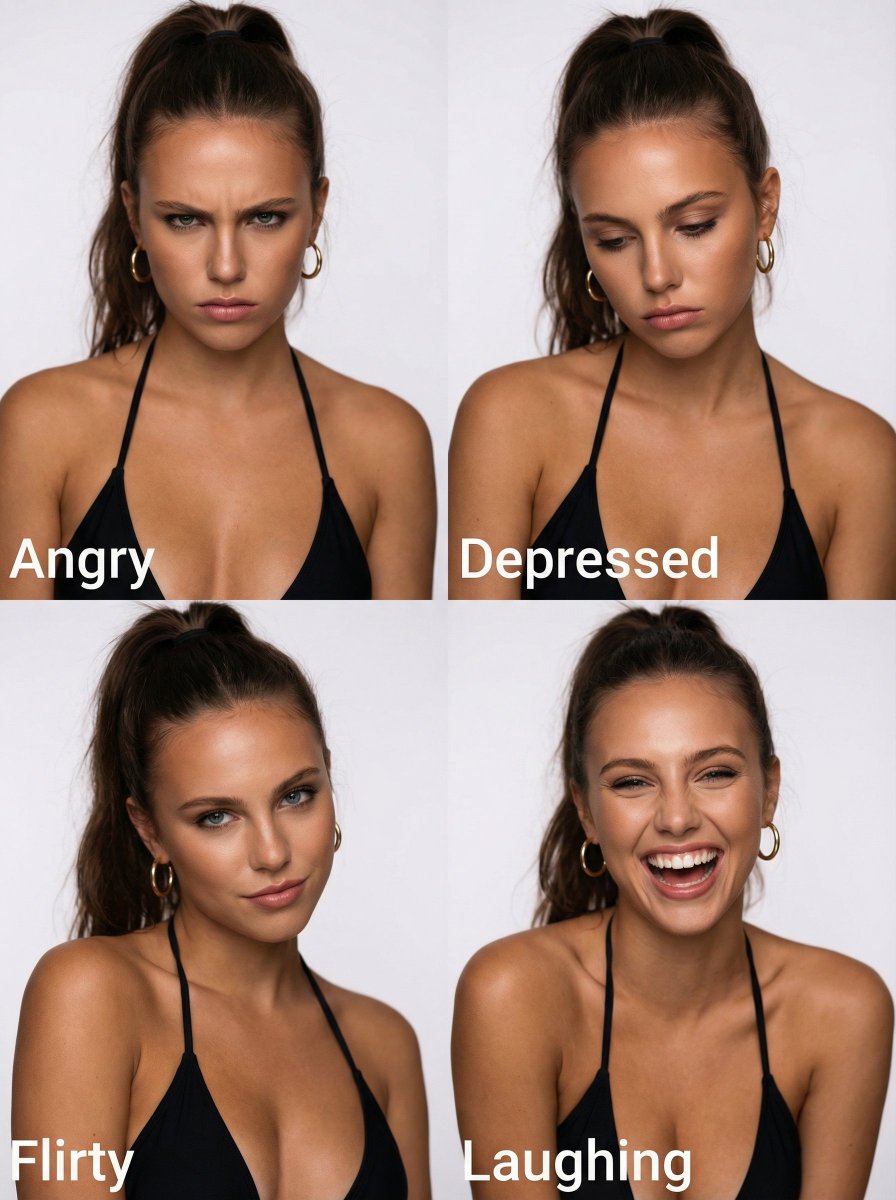
The prompt I used was detailed, specifying a young woman with warm tan skin, dark brown hair pulled into a high ponytail, and subtle natural makeup that highlights her features without overpowering the emotions. Each portrait focused on the upper body, from chest to head, shot with an 85mm lens to emphasize the sharpness of her eyes and the texture of her skin. The lighting was soft and diffused, creating a beauty light effect that enhanced every micro detail — from individual hair strands to realistic shadows that gave depth to the expressions.
The collage layout was a neat 2 by 2 grid with each photo labeled at the top center in white text over a soft minimal studio backdrop, keeping all attention on her mood. The four emotions portrayed were Angry, Depressed, Flirty, and Laughing. Each mood had its own unique facial expression: tense brows and narrowed eyes for anger, a downward gaze and low energy for depression, a half-smirk with a head tilt to flirt, and an open mouth with genuine laughter to capture joy.
What struck me most was how the AI's micro skin texture and natural skin tones brought such realism that these portraits felt like candid moments frozen in time. The high dynamic range color grading made the images pop, enhancing the emotional intensity without losing subtlety.
Working with this prompt taught me a lot about image generation nuances—especially how crucial lighting and focus are in expressing mood. Minor adjustments to the prompt, like specifying the exact placement of labels and the type of lighting, made all the difference. It’s a reminder that even in AI art creation, the smallest details shape the final emotional impact.
If you’re curious about how to use prompts to explore mood through portraiture or want practical tips on prompt adjustments for hyper-realistic results, this approach is worth trying. It’s a vivid way to translate complex feelings into visual art using AI.
You can find the full prompt here: ✨Prompt✨
For those interested in exploring further, check out this AI image generator and learn more about text to image tools and techniques.